Zakat: The Law of Almsgiving
English book, p. 54
By Maulana Wahiduddin Khan
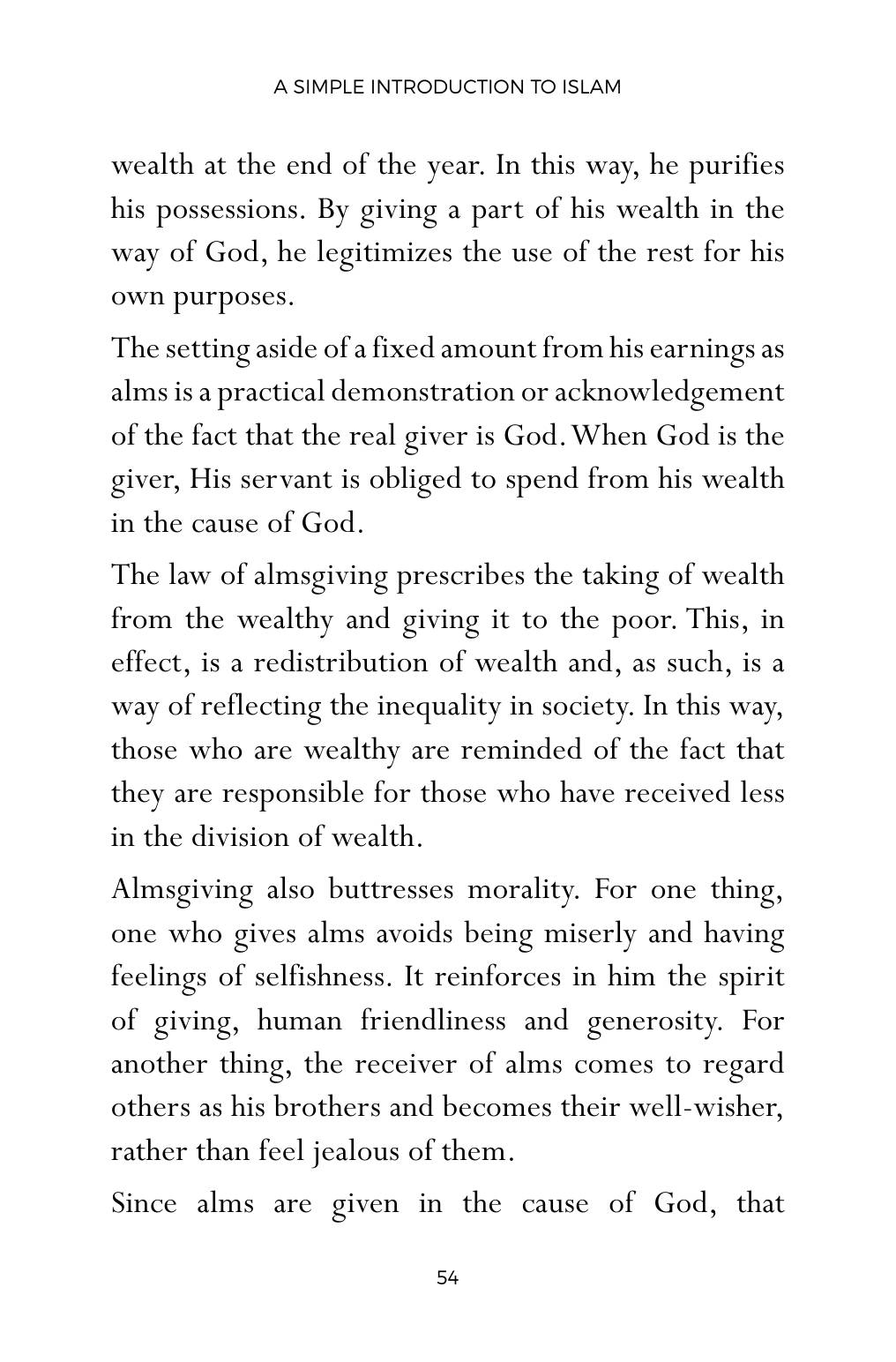
wealth at the end of the year. In this way, he purifies his possessions. By giving a part of his wealth in the way of God, he legitimizes the use of the rest for his own purposes. The setting aside of a fixed amount from his earnings as alms is a practical demonstration or acknowledgement of the fact that the real giver is God. When God is the giver, His servant is obliged to spend from his wealth in the cause of God. The law of almsgiving prescribes the taking of wealth from the wealthy and giving it to the poor. This, in effect, is a redistribution of wealth and, as such, is a way of reflecting the inequality in society. In this way, those who are wealthy are reminded of the fact that they are responsible for those who have received less in the division of wealth. Almsgiving also buttresses morality. For one thing, one who gives alms avoids being miserly and having feelings of selfishness. It reinforces in him the spirit of giving, human friendliness and generosity. For another thing, the receiver of alms comes to regard others as his brothers and becomes their well-wisher, rather than feel jealous of them. Since alms are given in the cause of God, that
‹ Previous page Next page › About this book Open in the reader