Realism
English book, p. 21
By Maulana Wahiduddin Khan
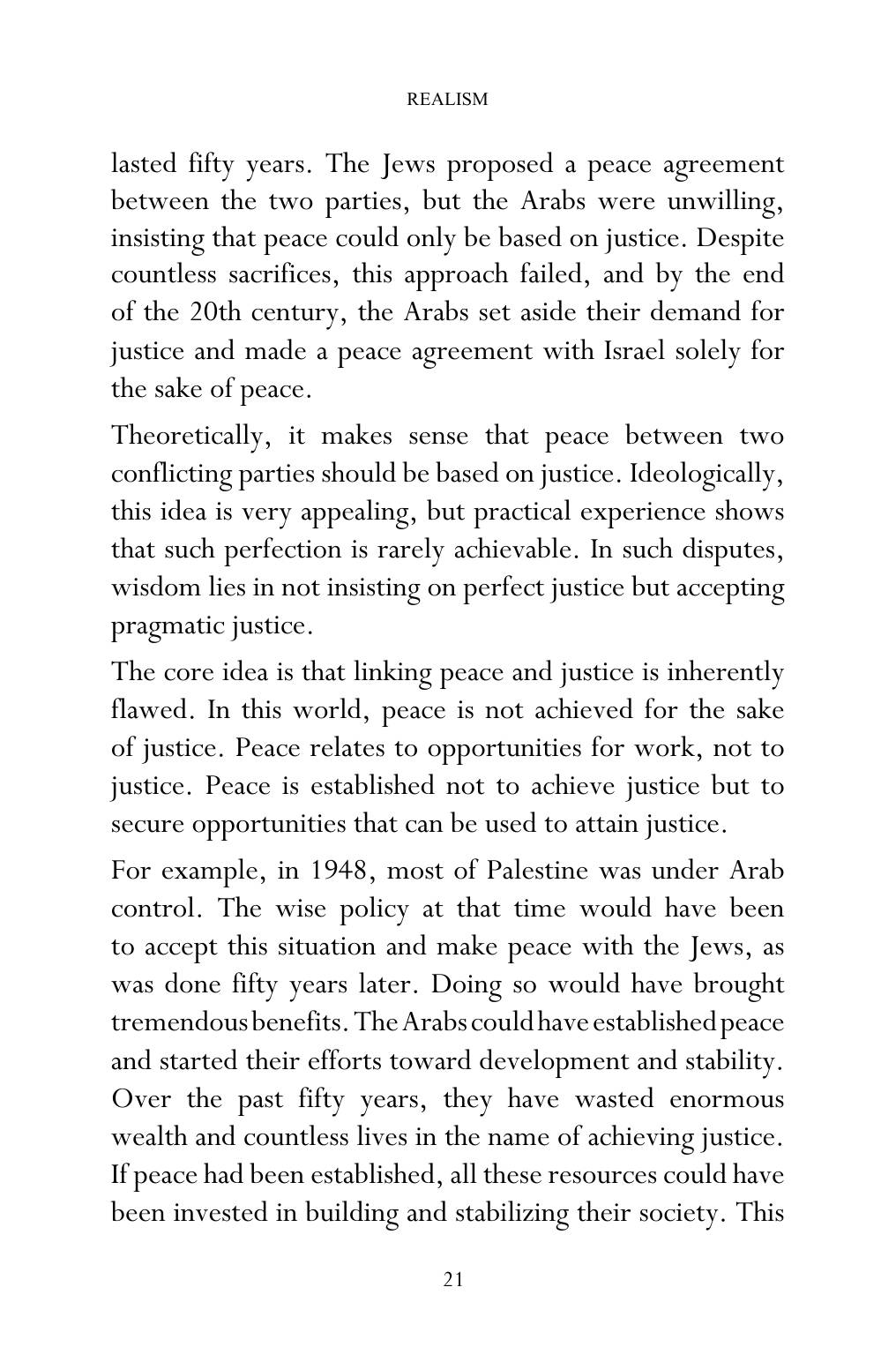
Realism lasted fifty years. The Jews proposed a peace agreement between the two parties, but the Arabs were unwilling, insisting that peace could only be based on justice. Despite countless sacrifices, this approach failed, and by the end of the 20th century, the Arabs set aside their demand for justice and made a peace agreement with Israel solely for the sake of peace. Theoretically, it makes sense that peace between two conflicting parties should be based on justice. Ideologically, this idea is very appealing, but practical experience shows that such perfection is rarely achievable. In such disputes, wisdom lies in not insisting on perfect justice but accepting pragmatic justice. The core idea is that linking peace and justice is inherently flawed. In this world, peace is not achieved for the sake of justice. Peace relates to opportunities for work, not to justice. Peace is established not to achieve justice but to secure opportunities that can be used to attain justice. For example, in 1948, most of Palestine was under Arab control. The wise policy at that time would have been to accept this situation and make peace with the Jews, as was done fifty years later. Doing so would have brought tremendous benefits. The Arabs could have established peace and started their efforts toward development and stability. Over the past fifty years, they have wasted enormous wealth and countless lives in the name of achieving justice. If peace had been established, all these resources could have been invested in building and stabilizing their society. This
‹ Previous page Next page › About this book Open in the reader