The Culture of Peace
English book, p. 38
By Maulana Wahiduddin Khan
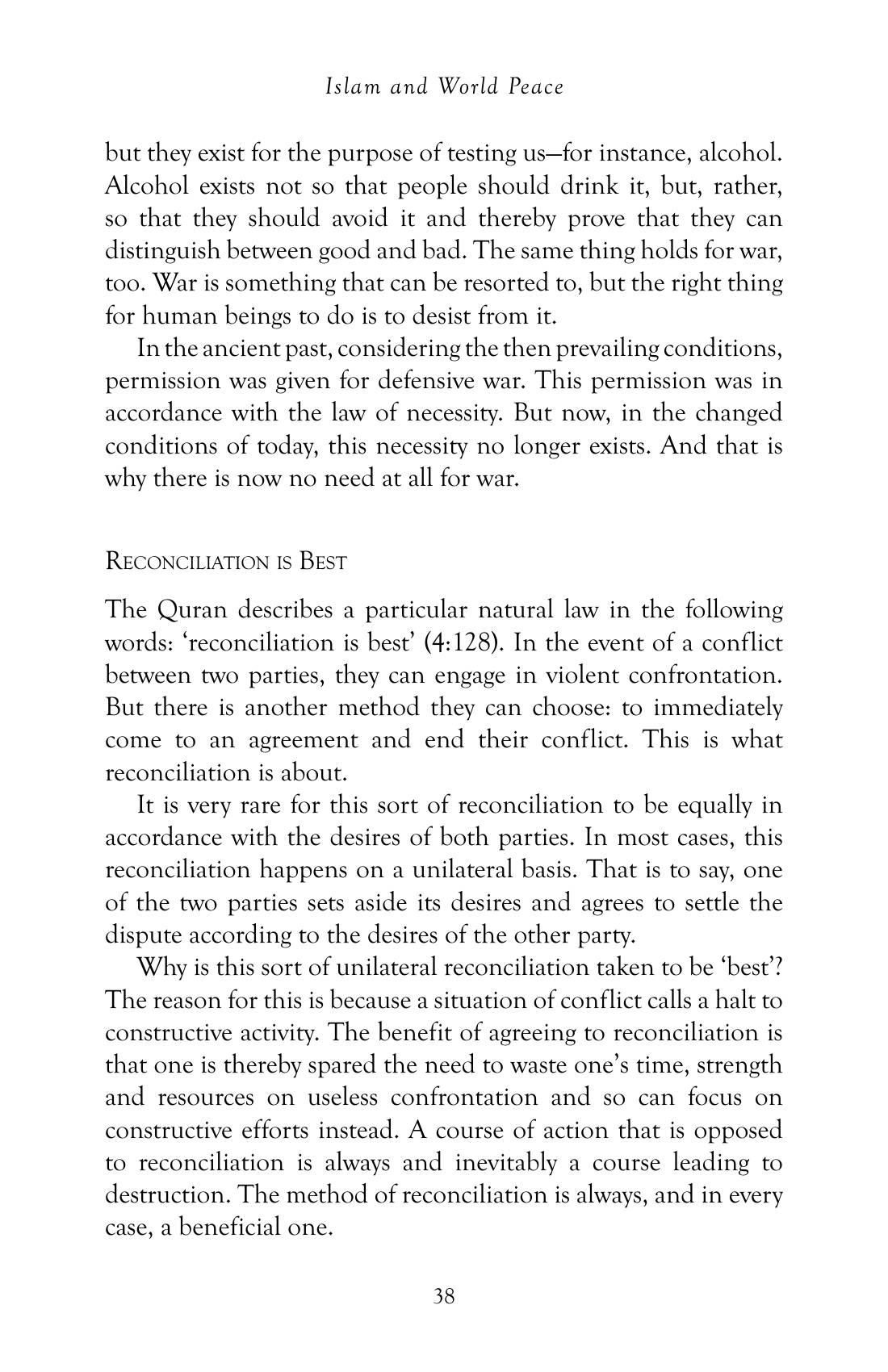
but they exist for the purpose of testing us—for instance, alcohol. Alcohol exists not so that people should drink it, but, rather, so that they should avoid it and thereby prove that they can distinguish between good and bad. The same thing holds for war, too. War is something that can be resorted to, but the right thing for human beings to do is to desist from it. In the ancient past, considering the then prevailing conditions, permission was given for defensive war. This permission was in accordance with the law of necessity. But now, in the changed conditions of today, this necessity no longer exists. And that is why there is now no need at all for war. Reconciliation is Best The Quran describes a particular natural law in the following words: ‘reconciliation is best’ (4:128). In the event of a conflict between two parties, they can engage in violent confrontation. But there is another method they can choose: to immediately come to an agreement and end their conflict. This is what reconciliation is about. It is very rare for this sort of reconciliation to be equally in accordance with the desires of both parties. In most cases, this reconciliation happens on a unilateral basis. That is to say, one of the two parties sets aside its desires and agrees to settle the dispute according to the desires of the other party. Why is this sort of unilateral reconciliation taken to be ‘best’? The reason for this is because a situation of conflict calls a halt to constructive activity. The benefit of agreeing to reconciliation is that one is thereby spared the need to waste one’s time, strength and resources on useless confrontation and so can focus on constructive efforts instead. A course of action that is opposed to reconciliation is always and inevitably a course leading to destruction. The method of reconciliation is always, and in every case, a beneficial one.
‹ Previous page Next page › About this book Open in the reader