The Shariah and its Application
English book, p. 160
By Maulana Wahiduddin Khan
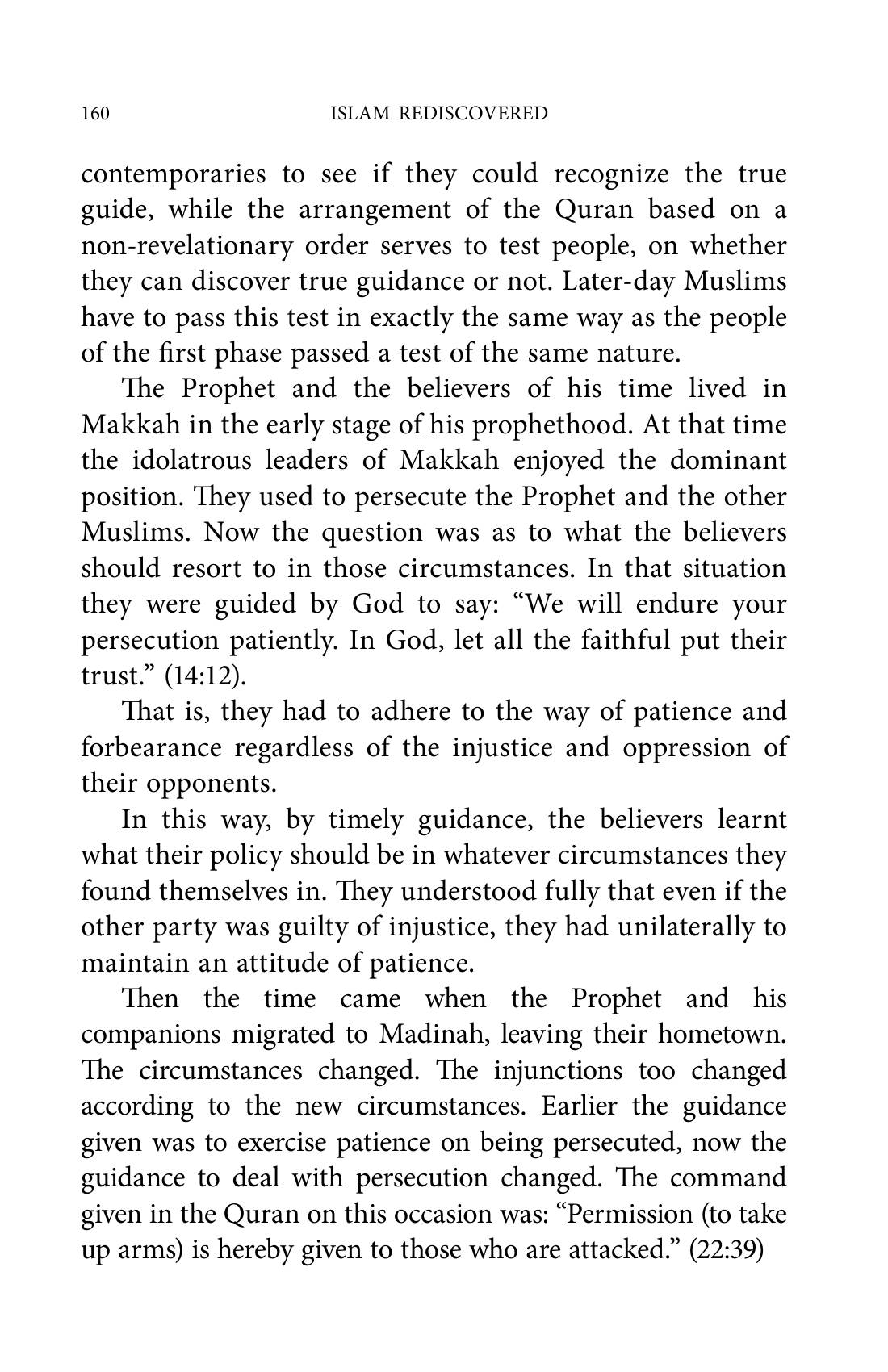
contemporaries to see if they could recognize the true guide, while the arrangement of the Quran based on a non-revelationary order serves to test people, on whether they can discover true guidance or not. Later-day Muslims have to pass this test in exactly the same way as the people of the first phase passed a test of the same nature. The Prophet and the believers of his time lived in Makkah in the early stage of his prophethood. At that time the idolatrous leaders of Makkah enjoyed the dominant position. They used to persecute the Prophet and the other Muslims. Now the question was as to what the believers should resort to in those circumstances. In that situation they were guided by God to say: “We will endure your persecution patiently. In God, let all the faithful put their trust.” (14:12). That is, they had to adhere to the way of patience and forbearance regardless of the injustice and oppression of their opponents. In this way, by timely guidance, the believers learnt what their policy should be in whatever circumstances they found themselves in. They understood fully that even if the other party was guilty of injustice, they had unilaterally to maintain an attitude of patience. Then the time came when the Prophet and his companions migrated to Madinah, leaving their hometown. The circumstances changed. The injunctions too changed according to the new circumstances. Earlier the guidance given was to exercise patience on being persecuted, now the guidance to deal with persecution changed. The command given in the Quran on this occasion was: “Permission (to take up arms) is hereby given to those who are attacked.” (22:39)
‹ Previous page Next page › About this book Open in the reader