Issues of Ijtihad
English book, p. 123
By Maulana Wahiduddin Khan
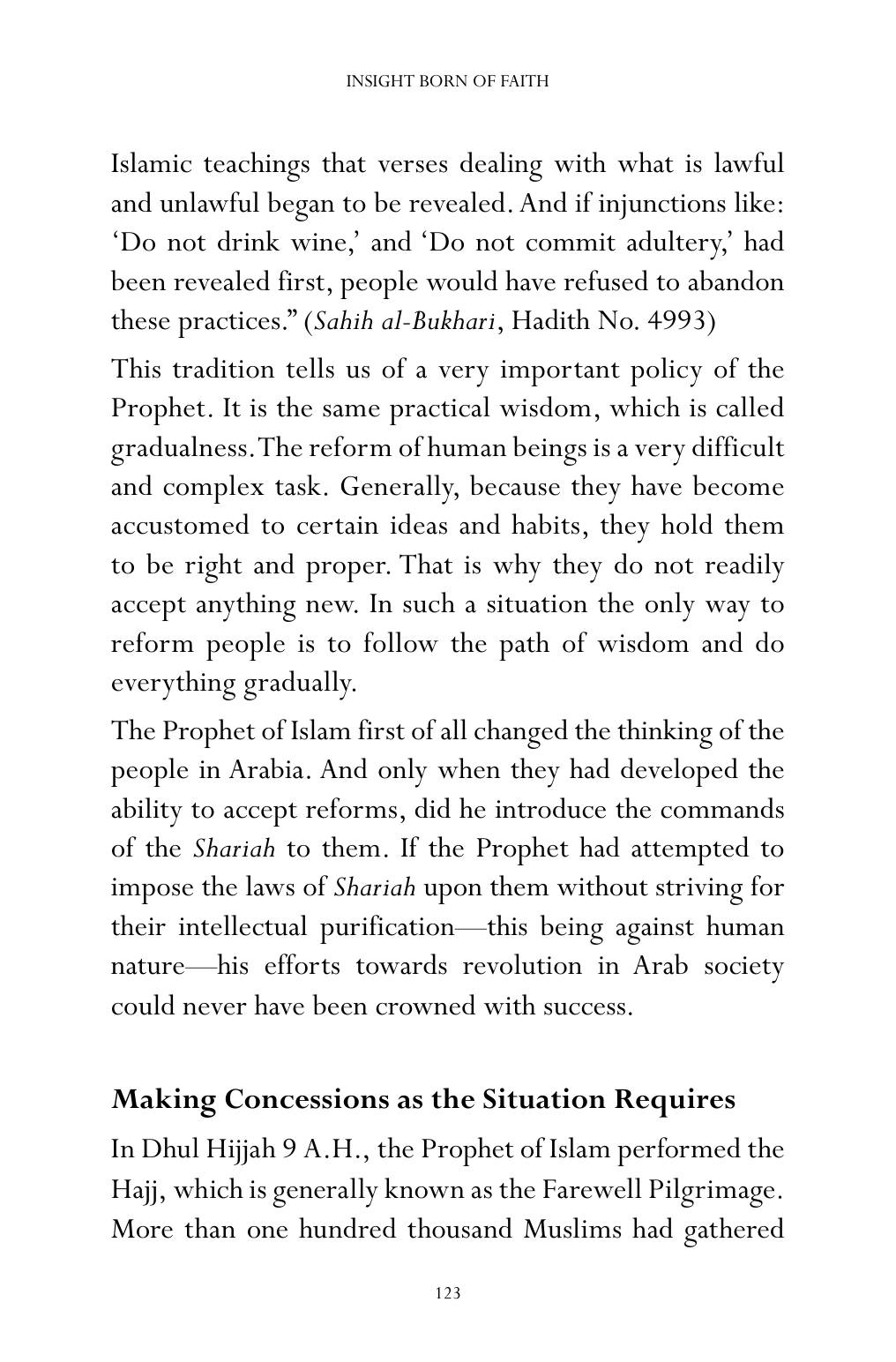
INSIGHT BORN OF FAITH Islamic teachings that verses dealing with what is lawful and unlawful began to be revealed. And if injunctions like: ‘Do not drink wine,’ and ‘Do not commit adultery,’ had been revealed first, people would have refused to abandon these practices.” (Sahih al-Bukhari, Hadith No. 4993) This tradition tells us of a very important policy of the Prophet. It is the same practical wisdom, which is called gradualness. The reform of human beings is a very difficult and complex task. Generally, because they have become accustomed to certain ideas and habits, they hold them to be right and proper. That is why they do not readily accept anything new. In such a situation the only way to reform people is to follow the path of wisdom and do everything gradually. The Prophet of Islam first of all changed the thinking of the people in Arabia. And only when they had developed the ability to accept reforms, did he introduce the commands of the Shariah to them. If the Prophet had attempted to impose the laws of Shariah upon them without striving for their intellectual purification—this being against human nature—his efforts towards revolution in Arab society could never have been crowned with success. Making Concessions as the Situation Requires In Dhul Hijjah 9 A.H., the Prophet of Islam performed the Hajj, which is generally known as the Farewell Pilgrimage. More than one hundred thousand Muslims had gathered
‹ Previous page Next page › About this book Open in the reader