In the Prophet’s Company
English book, p. 302
By Maulana Wahiduddin Khan
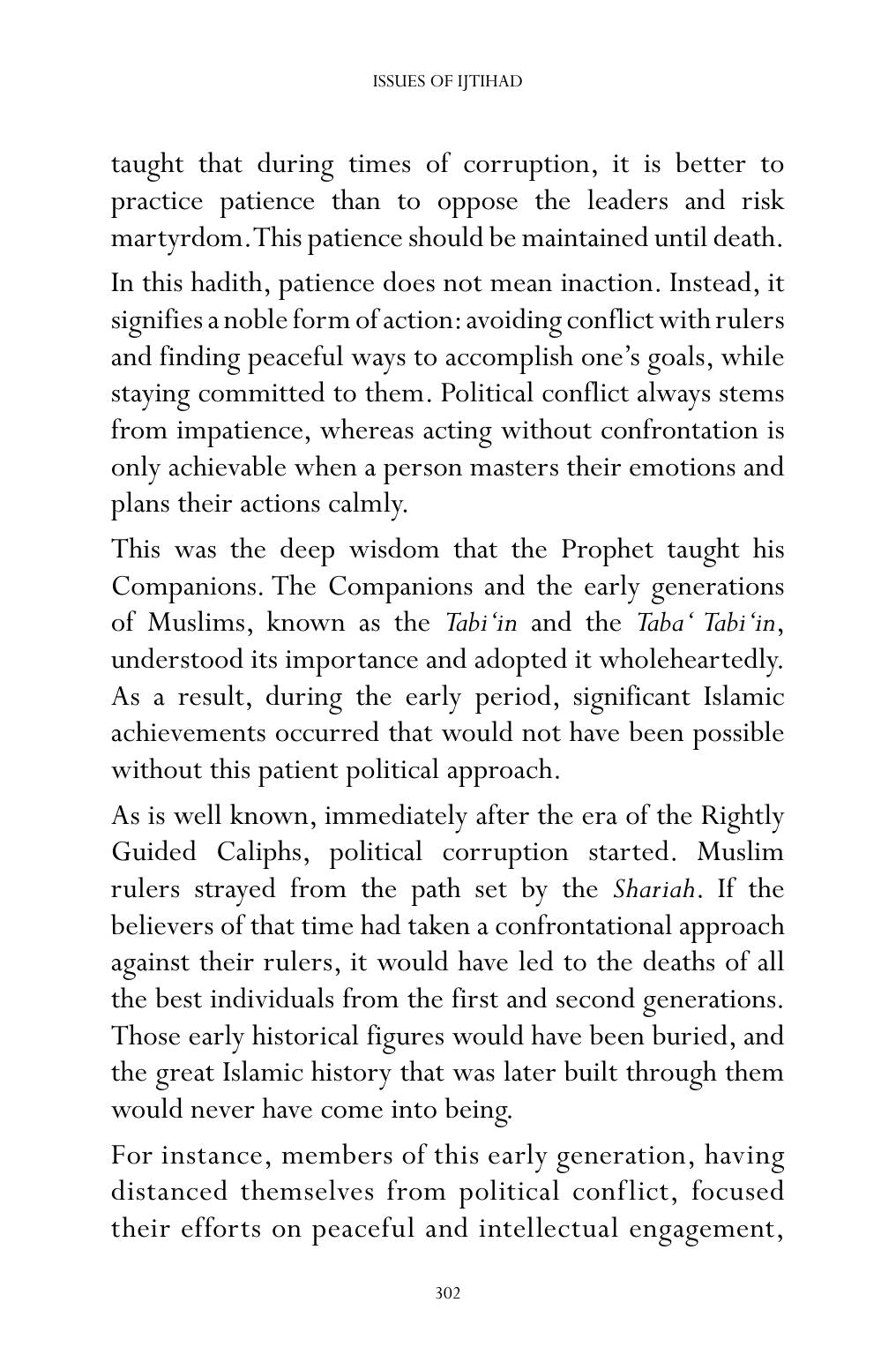
taught that during times of corruption, it is better to practice patience than to oppose the leaders and risk martyrdom. This patience should be maintained until death. In this hadith, patience does not mean inaction. Instead, it signifies a noble form of action: avoiding conflict with rulers and finding peaceful ways to accomplish one’s goals, while staying committed to them. Political conflict always stems from impatience, whereas acting without confrontation is only achievable when a person masters their emotions and plans their actions calmly. This was the deep wisdom that the Prophet taught his Companions. The Companions and the early generations of Muslims, known as the Tabi‘in and the Taba‘ Tabi‘in, understood its importance and adopted it wholeheartedly. As a result, during the early period, significant Islamic achievements occurred that would not have been possible without this patient political approach. As is well known, immediately after the era of the Rightly Guided Caliphs, political corruption started. Muslim rulers strayed from the path set by the Shariah. If the believers of that time had taken a confrontational approach against their rulers, it would have led to the deaths of all the best individuals from the first and second generations. Those early historical figures would have been buried, and the great Islamic history that was later built through them would never have come into being. For instance, members of this early generation, having distanced themselves from political conflict, focused their efforts on peaceful and intellectual engagement,
‹ Previous page Next page › About this book Open in the reader