How to Live in a Multifaith Society
English book, p. 7
By Maulana Wahiduddin Khan
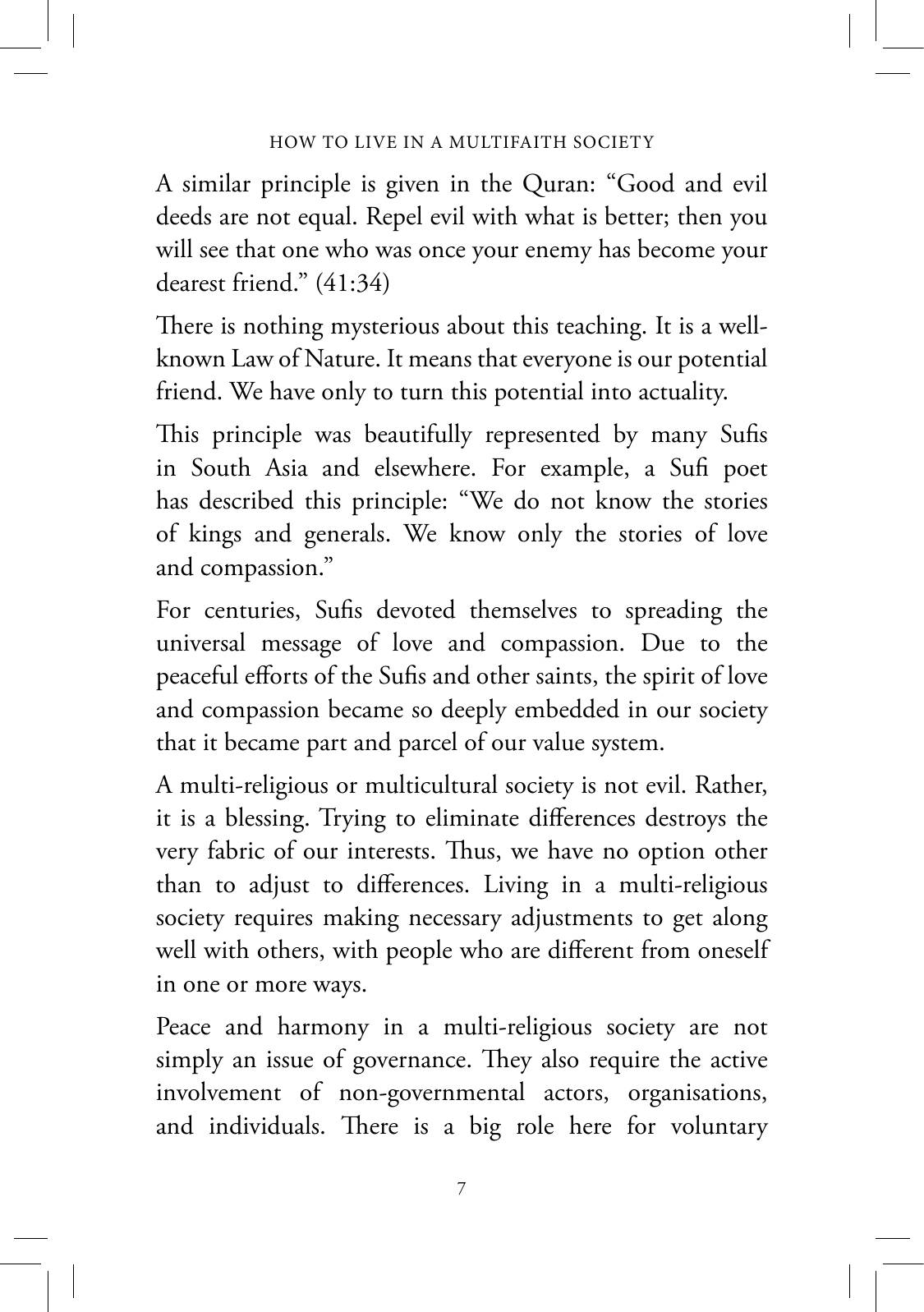
HOW TO LIVE IN A MULTIFAITH SOCIETY A similar principle is given in the Quran: “Good and evil deeds are not equal. Repel evil with what is better; then you will see that one who was once your enemy has become your dearest friend.” (41:34) There is nothing mysterious about this teaching. It is a wellknown Law of Nature. It means that everyone is our potential friend. We have only to turn this potential into actuality. This principle was beautifully represented by many Sufis in South Asia and elsewhere. For example, a Sufi poet has described this principle: “We do not know the stories of kings and generals. We know only the stories of love and compassion.” For centuries, Sufis devoted themselves to spreading the universal message of love and compassion. Due to the peaceful efforts of the Sufis and other saints, the spirit of love and compassion became so deeply embedded in our society that it became part and parcel of our value system. A multi-religious or multicultural society is not evil. Rather, it is a blessing. Trying to eliminate differences destroys the very fabric of our interests. Thus, we have no option other than to adjust to differences. Living in a multi-religious society requires making necessary adjustments to get along well with others, with people who are different from oneself in one or more ways. Peace and harmony in a multi-religious society are not simply an issue of governance. They also require the active involvement of non-governmental actors, organisations, and individuals. There is a big role here for voluntary
‹ Previous page Next page › About this book Open in the reader