Fasting and Character-Building Fasting and Self-Discipline
English book, p. 47
By Maulana Wahiduddin Khan
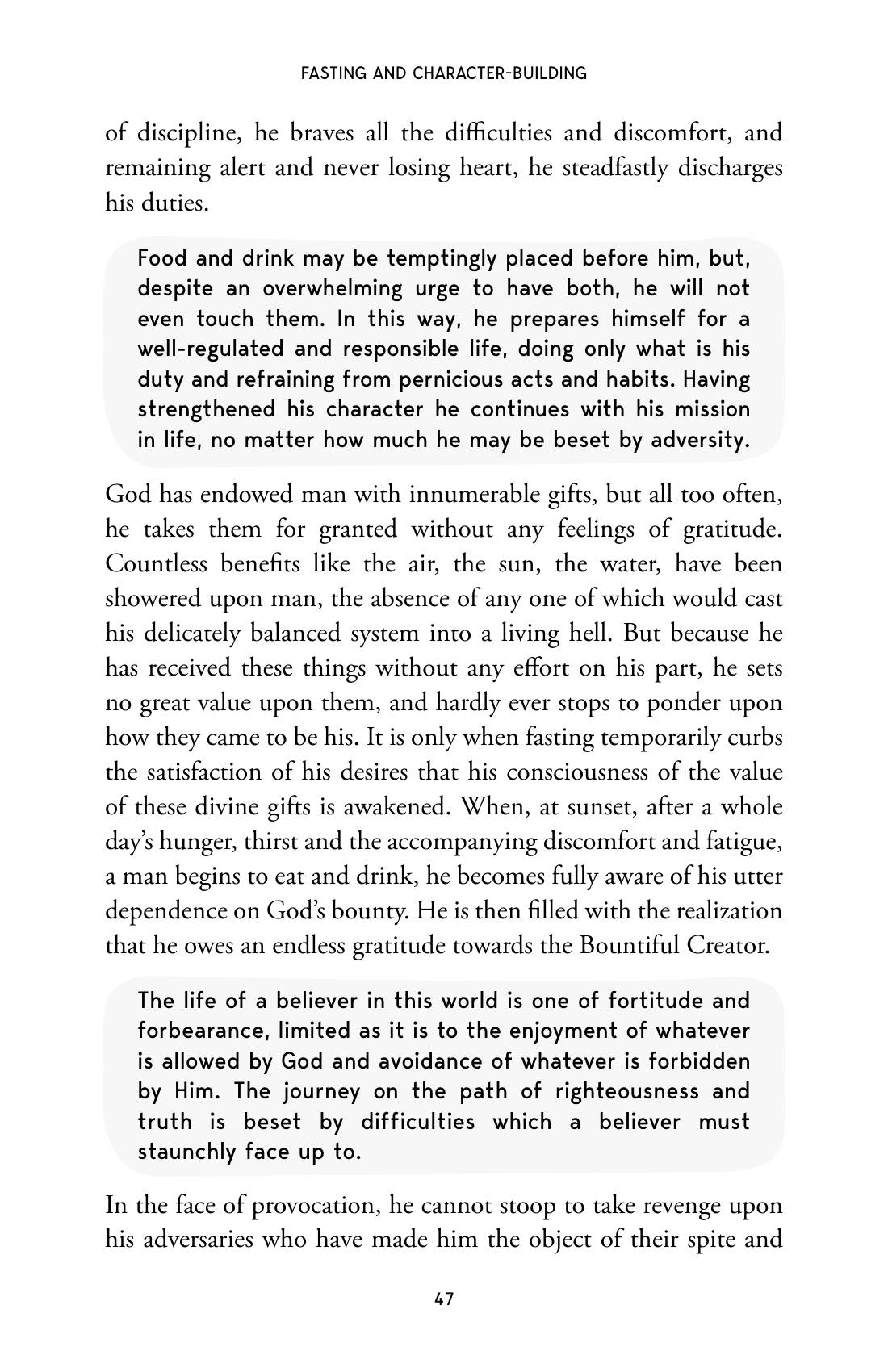
FASTING AND CHARACTER-BUILDING of discipline, he braves all the difficulties and discomfort, and remaining alert and never losing heart, he steadfastly discharges his duties. Food and drink may be temptingly placed before him, but, despite an overwhelming urge to have both, he will not even touch them. In this way, he prepares himself for a well-regulated and responsible life, doing only what is his duty and refraining from pernicious acts and habits. Having strengthened his character he continues with his mission in life, no matter how much he may be beset by adversity. God has endowed man with innumerable gifts, but all too often, he takes them for granted without any feelings of gratitude. Countless benefits like the air, the sun, the water, have been showered upon man, the absence of any one of which would cast his delicately balanced system into a living hell. But because he has received these things without any effort on his part, he sets no great value upon them, and hardly ever stops to ponder upon how they came to be his. It is only when fasting temporarily curbs the satisfaction of his desires that his consciousness of the value of these divine gifts is awakened. When, at sunset, after a whole day’s hunger, thirst and the accompanying discomfort and fatigue, a man begins to eat and drink, he becomes fully aware of his utter dependence on God’s bounty. He is then filled with the realization that he owes an endless gratitude towards the Bountiful Creator. The life of a believer in this world is one of fortitude and forbearance, limited as it is to the enjoyment of whatever is allowed by God and avoidance of whatever is forbidden by Him. The journey on the path of righteousness and truth is beset by difficulties which a believer must staunchly face up to. In the face of provocation, he cannot stoop to take revenge upon his adversaries who have made him the object of their spite and
‹ Previous page Next page › About this book Open in the reader