The No-Problem Person
English book, p. 140
By Maulana Wahiduddin Khan
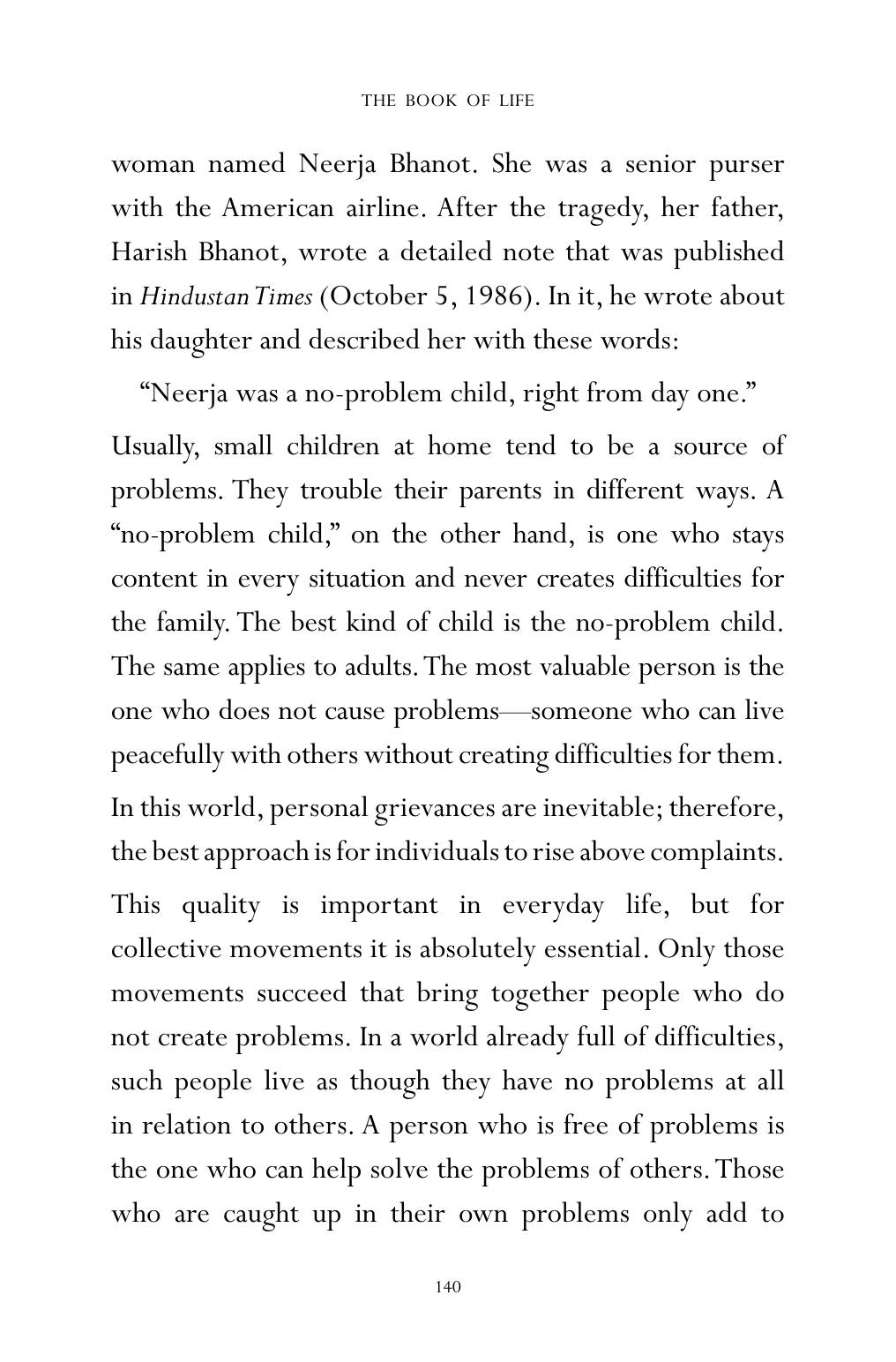
woman named Neerja Bhanot. She was a senior purser with the American airline. After the tragedy, her father, Harish Bhanot, wrote a detailed note that was published in Hindustan Times (October 5, 1986). In it, he wrote about his daughter and described her with these words: “Neerja was a no-problem child, right from day one.” Usually, small children at home tend to be a source of problems. They trouble their parents in different ways. A “no-problem child,” on the other hand, is one who stays content in every situation and never creates difficulties for the family. The best kind of child is the no-problem child. The same applies to adults. The most valuable person is the one who does not cause problems—someone who can live peacefully with others without creating difficulties for them. In this world, personal grievances are inevitable; therefore, the best approach is for individuals to rise above complaints. This quality is important in everyday life, but for collective movements it is absolutely essential. Only those movements succeed that bring together people who do not create problems. In a world already full of difficulties, such people live as though they have no problems at all in relation to others. A person who is free of problems is the one who can help solve the problems of others. Those who are caught up in their own problems only add to
‹ Previous page Next page › About this book Open in the reader