Arguments from the Quran
English book, p. 379
By Maulana Wahiduddin Khan
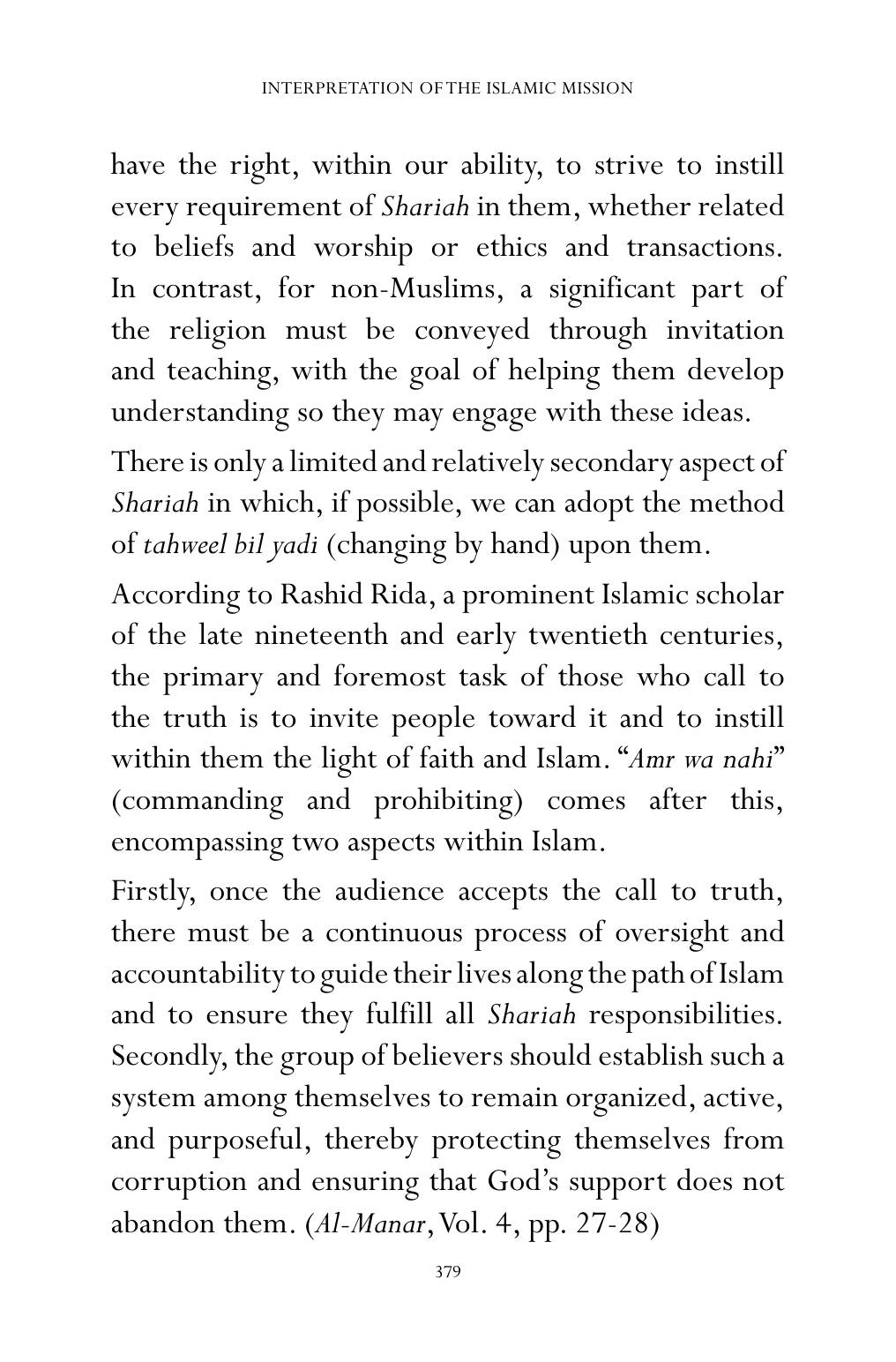
INTERPRETATION OF THE ISLAMIC MISSION have the right, within our ability, to strive to instill every requirement of Shariah in them, whether related to beliefs and worship or ethics and transactions. In contrast, for non-Muslims, a significant part of the religion must be conveyed through invitation and teaching, with the goal of helping them develop understanding so they may engage with these ideas. There is only a limited and relatively secondary aspect of Shariah in which, if possible, we can adopt the method of tahweel bil yadi (changing by hand) upon them. According to Rashid Rida, a prominent Islamic scholar of the late nineteenth and early twentieth centuries, the primary and foremost task of those who call to the truth is to invite people toward it and to instill within them the light of faith and Islam. “Amr wa nahi” (commanding and prohibiting) comes after this, encompassing two aspects within Islam. Firstly, once the audience accepts the call to truth, there must be a continuous process of oversight and accountability to guide their lives along the path of Islam and to ensure they fulfill all Shariah responsibilities. Secondly, the group of believers should establish such a system among themselves to remain organized, active, and purposeful, thereby protecting themselves from corruption and ensuring that God’s support does not abandon them. (Al-Manar, Vol. 4, pp. 27-28)
‹ Previous page Next page › About this book Open in the reader