The Issue of Blasphemy
English book, p. 10
By Maulana Wahiduddin Khan
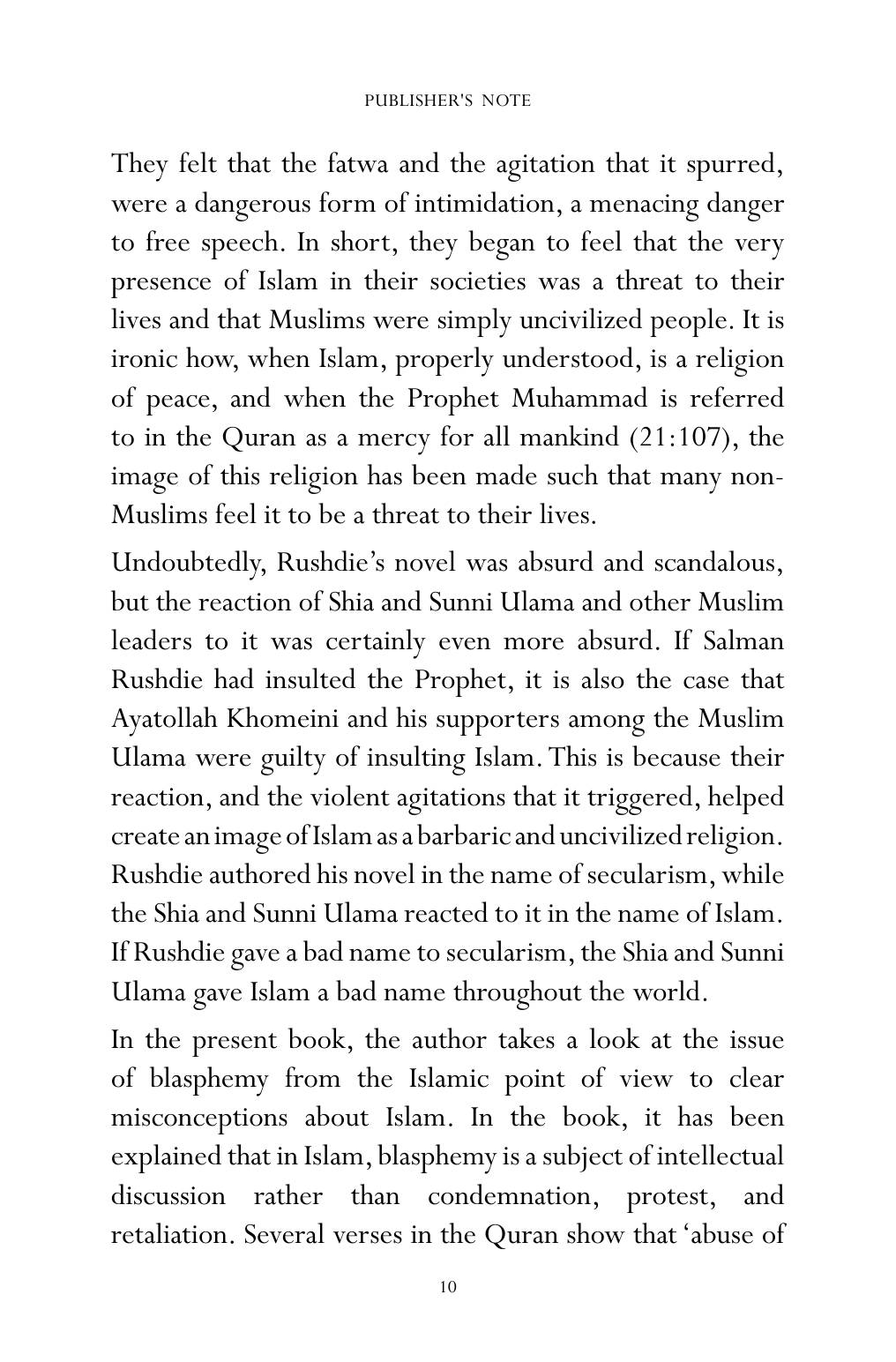
PUBLISHER'S NOTE They felt that the fatwa and the agitation that it spurred, were a dangerous form of intimidation, a menacing danger to free speech. In short, they began to feel that the very presence of Islam in their societies was a threat to their lives and that Muslims were simply uncivilized people. It is ironic how, when Islam, properly understood, is a religion of peace, and when the Prophet Muhammad is referred to in the Quran as a mercy for all mankind (21:107), the image of this religion has been made such that many nonMuslims feel it to be a threat to their lives. Undoubtedly, Rushdie’s novel was absurd and scandalous, but the reaction of Shia and Sunni Ulama and other Muslim leaders to it was certainly even more absurd. If Salman Rushdie had insulted the Prophet, it is also the case that Ayatollah Khomeini and his supporters among the Muslim Ulama were guilty of insulting Islam. This is because their reaction, and the violent agitations that it triggered, helped create an image of Islam as a barbaric and uncivilized religion. Rushdie authored his novel in the name of secularism, while the Shia and Sunni Ulama reacted to it in the name of Islam. If Rushdie gave a bad name to secularism, the Shia and Sunni Ulama gave Islam a bad name throughout the world. In the present book, the author takes a look at the issue of blasphemy from the Islamic point of view to clear misconceptions about Islam. In the book, it has been explained that in Islam, blasphemy is a subject of intellectual discussion rather than condemnation, protest, and retaliation. Several verses in the Quran show that ‘abuse of
‹ Previous page Next page › About this book Open in the reader