Wrong Representation
English book, p. 114
By Maulana Wahiduddin Khan
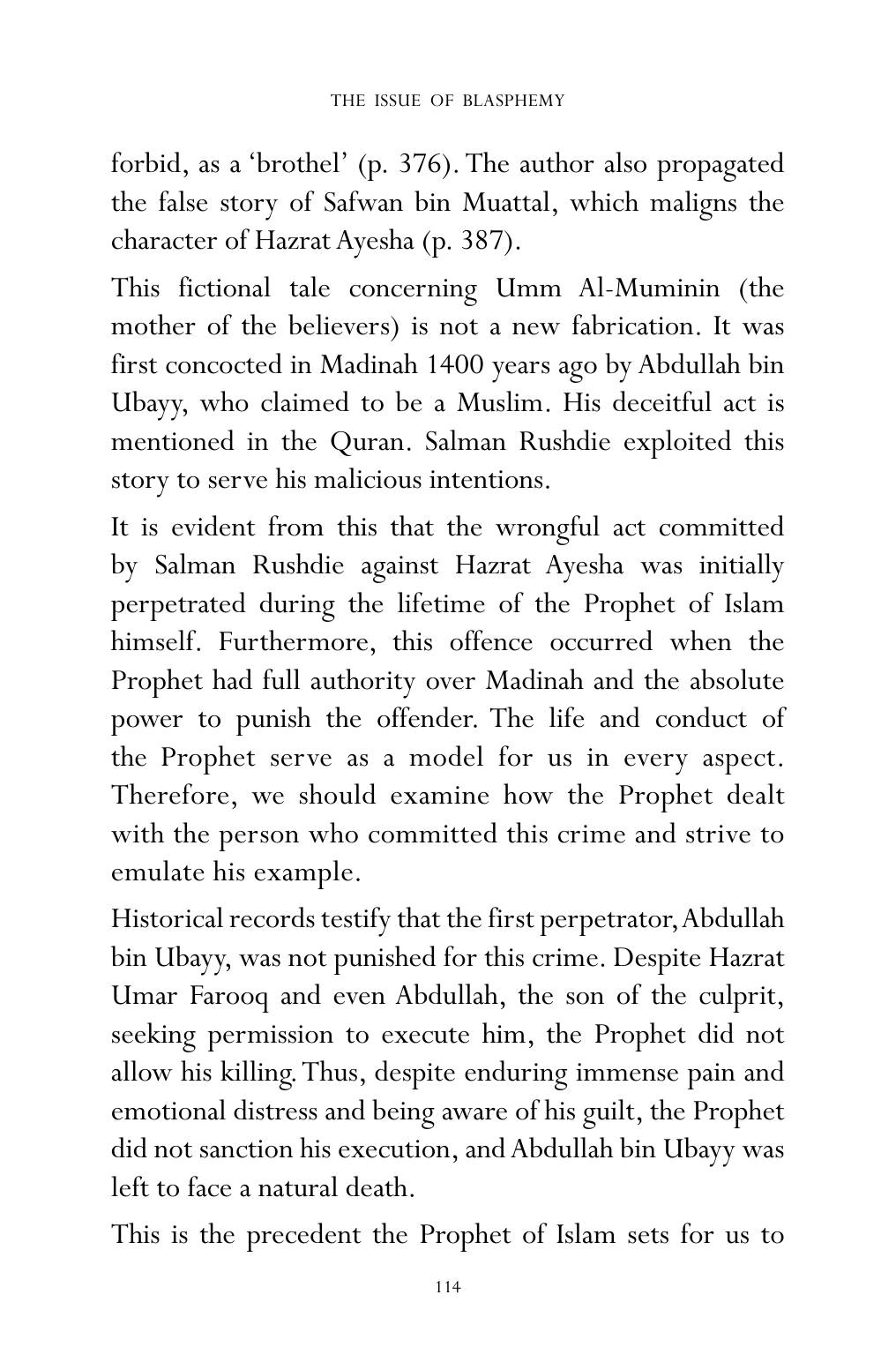
forbid, as a ‘brothel’ (p. 376). The author also propagated the false story of Safwan bin Muattal, which maligns the character of Hazrat Ayesha (p. 387). This fictional tale concerning Umm Al-Muminin (the mother of the believers) is not a new fabrication. It was first concocted in Madinah 1400 years ago by Abdullah bin Ubayy, who claimed to be a Muslim. His deceitful act is mentioned in the Quran. Salman Rushdie exploited this story to serve his malicious intentions. It is evident from this that the wrongful act committed by Salman Rushdie against Hazrat Ayesha was initially perpetrated during the lifetime of the Prophet of Islam himself. Furthermore, this offence occurred when the Prophet had full authority over Madinah and the absolute power to punish the offender. The life and conduct of the Prophet serve as a model for us in every aspect. Therefore, we should examine how the Prophet dealt with the person who committed this crime and strive to emulate his example. Historical records testify that the first perpetrator, Abdullah bin Ubayy, was not punished for this crime. Despite Hazrat Umar Farooq and even Abdullah, the son of the culprit, seeking permission to execute him, the Prophet did not allow his killing. Thus, despite enduring immense pain and emotional distress and being aware of his guilt, the Prophet did not sanction his execution, and Abdullah bin Ubayy was left to face a natural death. This is the precedent the Prophet of Islam sets for us to
‹ Previous page Next page › About this book Open in the reader