Emigration—From Makkah to Madinah
English book, p. 217
By Maulana Wahiduddin Khan
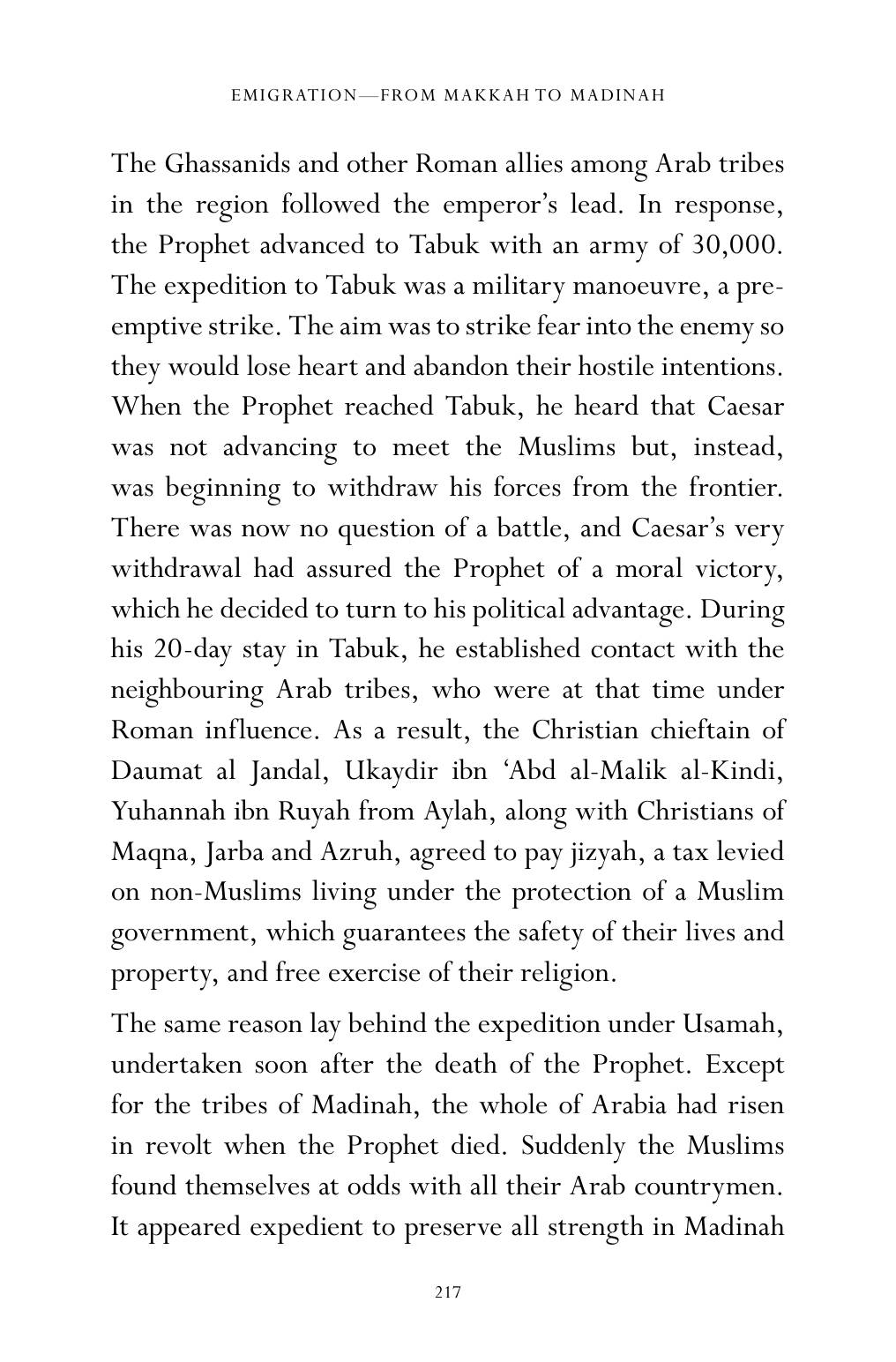
EMIGRATION—FROM MAKKAH TO MADINAH The Ghassanids and other Roman allies among Arab tribes in the region followed the emperor’s lead. In response, the Prophet advanced to Tabuk with an army of 30,000. The expedition to Tabuk was a military manoeuvre, a preemptive strike. The aim was to strike fear into the enemy so they would lose heart and abandon their hostile intentions. When the Prophet reached Tabuk, he heard that Caesar was not advancing to meet the Muslims but, instead, was beginning to withdraw his forces from the frontier. There was now no question of a battle, and Caesar’s very withdrawal had assured the Prophet of a moral victory, which he decided to turn to his political advantage. During his 20-day stay in Tabuk, he established contact with the neighbouring Arab tribes, who were at that time under Roman influence. As a result, the Christian chieftain of Daumat al Jandal, Ukaydir ibn ‘Abd al-Malik al-Kindi, Yuhannah ibn Ruyah from Aylah, along with Christians of Maqna, Jarba and Azruh, agreed to pay jizyah, a tax levied on non-Muslims living under the protection of a Muslim government, which guarantees the safety of their lives and property, and free exercise of their religion. The same reason lay behind the expedition under Usamah, undertaken soon after the death of the Prophet. Except for the tribes of Madinah, the whole of Arabia had risen in revolt when the Prophet died. Suddenly the Muslims found themselves at odds with all their Arab countrymen. It appeared expedient to preserve all strength in Madinah
‹ Previous page Next page › About this book Open in the reader