Maulana Maududi’s Writings
English book, p. 33
By Maulana Wahiduddin Khan
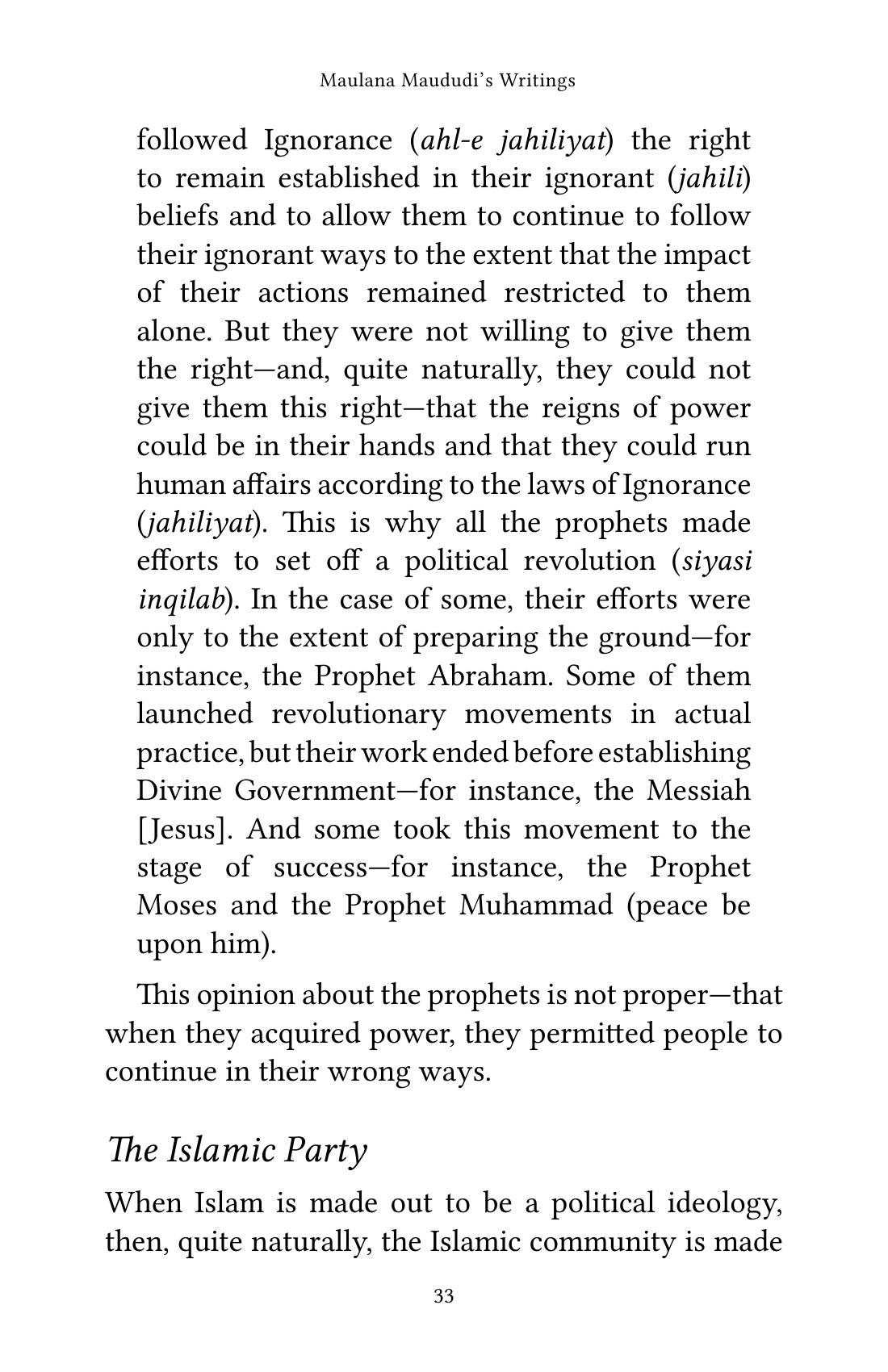
Maulana Maududi’s Writings followed Ignorance (ahl-e jahiliyat) the right to remain established in their ignorant (jahili) beliefs and to allow them to continue to follow their ignorant ways to the extent that the impact of their actions remained restricted to them alone. But they were not willing to give them the right—and, quite naturally, they could not give them this right—that the reigns of power could be in their hands and that they could run human affairs according to the laws of Ignorance (jahiliyat). This is why all the prophets made efforts to set off a political revolution (siyasi inqilab). In the case of some, their efforts were only to the extent of preparing the ground—for instance, the Prophet Abraham. Some of them launched revolutionary movements in actual practice, but their work ended before establishing Divine Government—for instance, the Messiah [Jesus]. And some took this movement to the stage of success—for instance, the Prophet Moses and the Prophet Muhammad (peace be upon him). This opinion about the prophets is not proper—that when they acquired power, they permitted people to continue in their wrong ways. The Islamic Party When Islam is made out to be a political ideology, then, quite naturally, the Islamic community is made
‹ Previous page Next page › About this book Open in the reader