Freedom of Thought and Expression
English book, p. 14
By Maulana Wahiduddin Khan
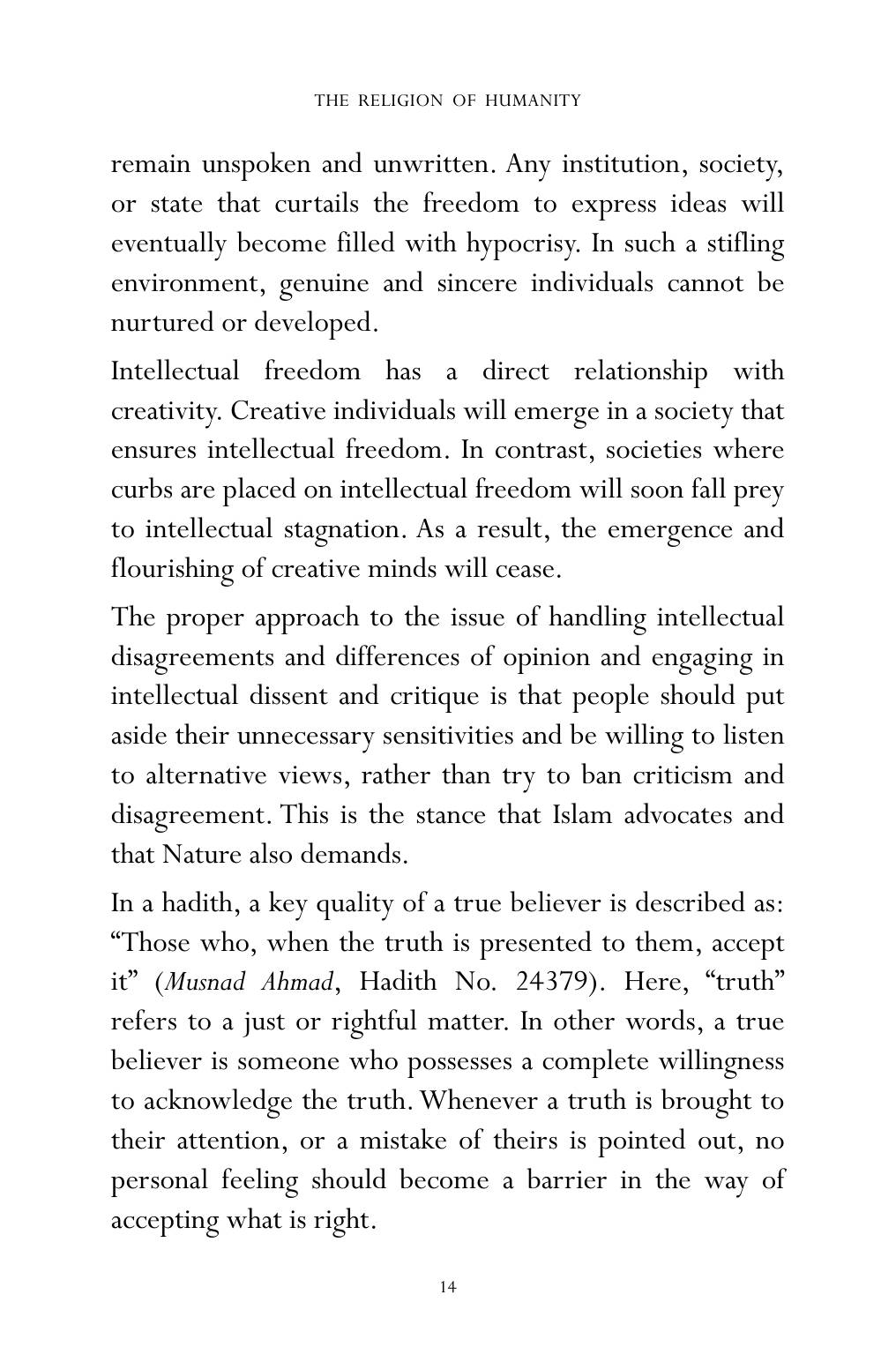
remain unspoken and unwritten. Any institution, society, or state that curtails the freedom to express ideas will eventually become filled with hypocrisy. In such a stifling environment, genuine and sincere individuals cannot be nurtured or developed. Intellectual freedom has a direct relationship with creativity. Creative individuals will emerge in a society that ensures intellectual freedom. In contrast, societies where curbs are placed on intellectual freedom will soon fall prey to intellectual stagnation. As a result, the emergence and flourishing of creative minds will cease. The proper approach to the issue of handling intellectual disagreements and differences of opinion and engaging in intellectual dissent and critique is that people should put aside their unnecessary sensitivities and be willing to listen to alternative views, rather than try to ban criticism and disagreement. This is the stance that Islam advocates and that Nature also demands. In a hadith, a key quality of a true believer is described as: “Those who, when the truth is presented to them, accept it” (Musnad Ahmad, Hadith No. 24379). Here, “truth” refers to a just or rightful matter. In other words, a true believer is someone who possesses a complete willingness to acknowledge the truth. Whenever a truth is brought to their attention, or a mistake of theirs is pointed out, no personal feeling should become a barrier in the way of accepting what is right.
‹ Previous page Next page › About this book Open in the reader