The Sound Word (Qawl Sadeed
English book, p. 222
By Maulana Wahiduddin Khan
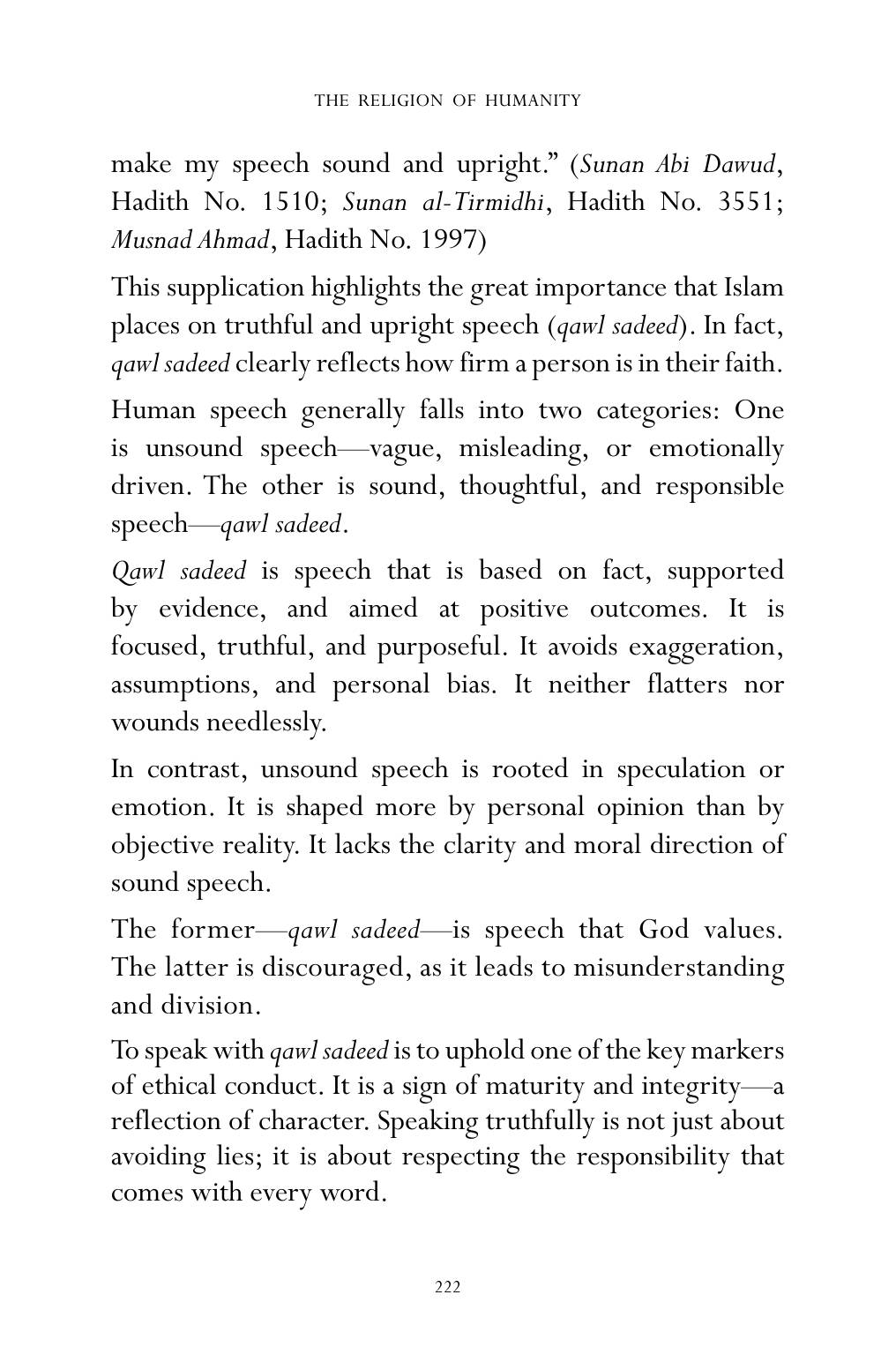
make my speech sound and upright.” (Sunan Abi Dawud, Hadith No. 1510; Sunan al-Tirmidhi, Hadith No. 3551; Musnad Ahmad, Hadith No. 1997) This supplication highlights the great importance that Islam places on truthful and upright speech (qawl sadeed). In fact, qawl sadeed clearly reflects how firm a person is in their faith. Human speech generally falls into two categories: One is unsound speech—vague, misleading, or emotionally driven. The other is sound, thoughtful, and responsible speech—qawl sadeed. Qawl sadeed is speech that is based on fact, supported by evidence, and aimed at positive outcomes. It is focused, truthful, and purposeful. It avoids exaggeration, assumptions, and personal bias. It neither flatters nor wounds needlessly. In contrast, unsound speech is rooted in speculation or emotion. It is shaped more by personal opinion than by objective reality. It lacks the clarity and moral direction of sound speech. The former—qawl sadeed—is speech that God values. The latter is discouraged, as it leads to misunderstanding and division. To speak with qawl sadeed is to uphold one of the key markers of ethical conduct. It is a sign of maturity and integrity—a reflection of character. Speaking truthfully is not just about avoiding lies; it is about respecting the responsibility that comes with every word.
‹ Previous page Next page › About this book Open in the reader