THE RELIGION OF HUMANITY: Islam’s Ethical and Spiritual Outlook
English book, p. 61
By Maulana Wahiduddin Khan
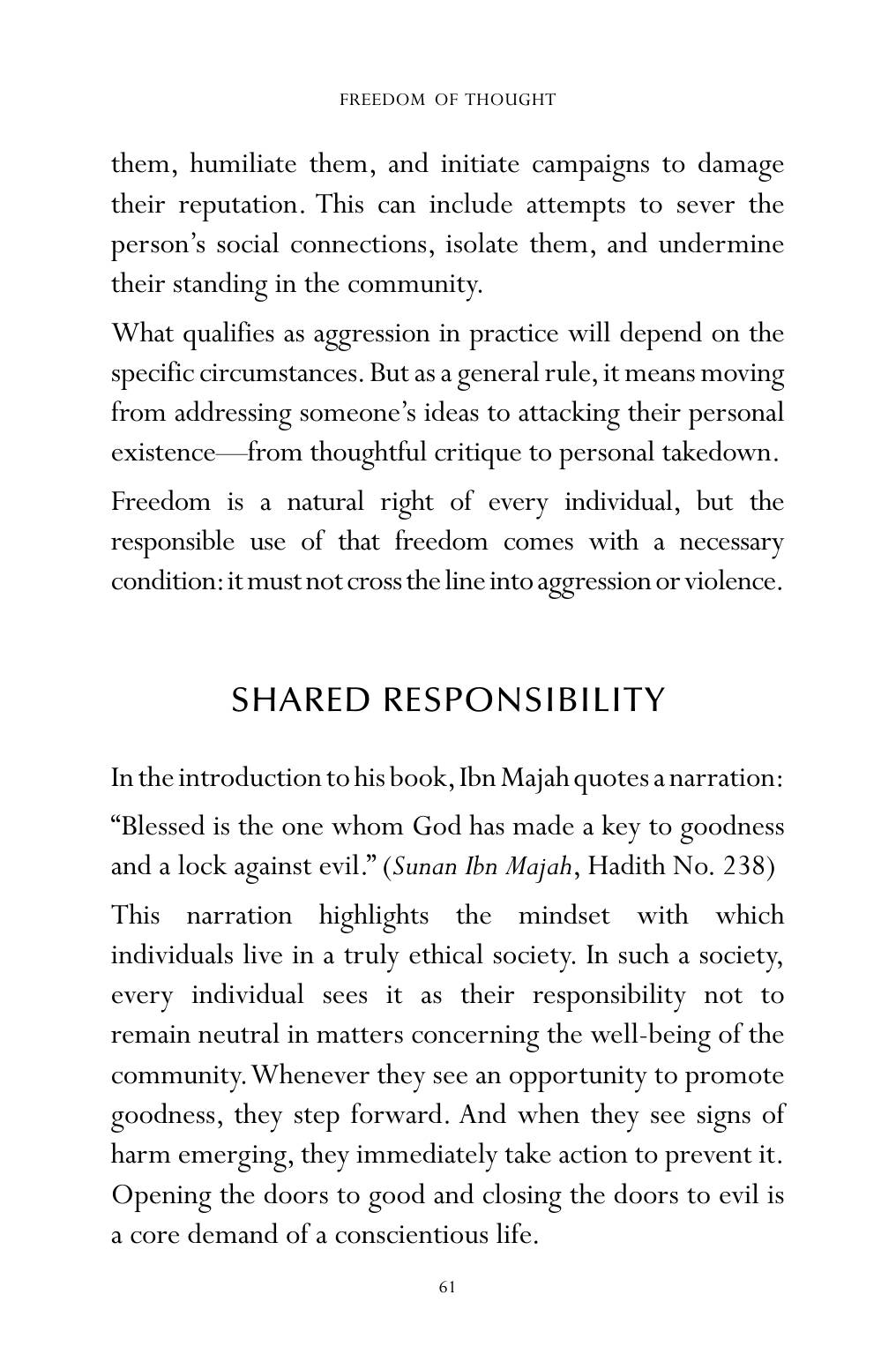
FREEDOM OF THOUGHT them, humiliate them, and initiate campaigns to damage their reputation. This can include attempts to sever the person’s social connections, isolate them, and undermine their standing in the community. What qualifies as aggression in practice will depend on the specific circumstances. But as a general rule, it means moving from addressing someone’s ideas to attacking their personal existence—from thoughtful critique to personal takedown. Freedom is a natural right of every individual, but the responsible use of that freedom comes with a necessary condition: it must not cross the line into aggression or violence. SHARED RESPONSIBILITY In the introduction to his book, Ibn Majah quotes a narration: “Blessed is the one whom God has made a key to goodness and a lock against evil.” (Sunan Ibn Majah, Hadith No. 238) This narration highlights the mindset with which individuals live in a truly ethical society. In such a society, every individual sees it as their responsibility not to remain neutral in matters concerning the well-being of the community. Whenever they see an opportunity to promote goodness, they step forward. And when they see signs of harm emerging, they immediately take action to prevent it. Opening the doors to good and closing the doors to evil is a core demand of a conscientious life.
‹ Previous page Next page › About this book Open in the reader