Shared Responsibility
English book, p. 63
By Maulana Wahiduddin Khan
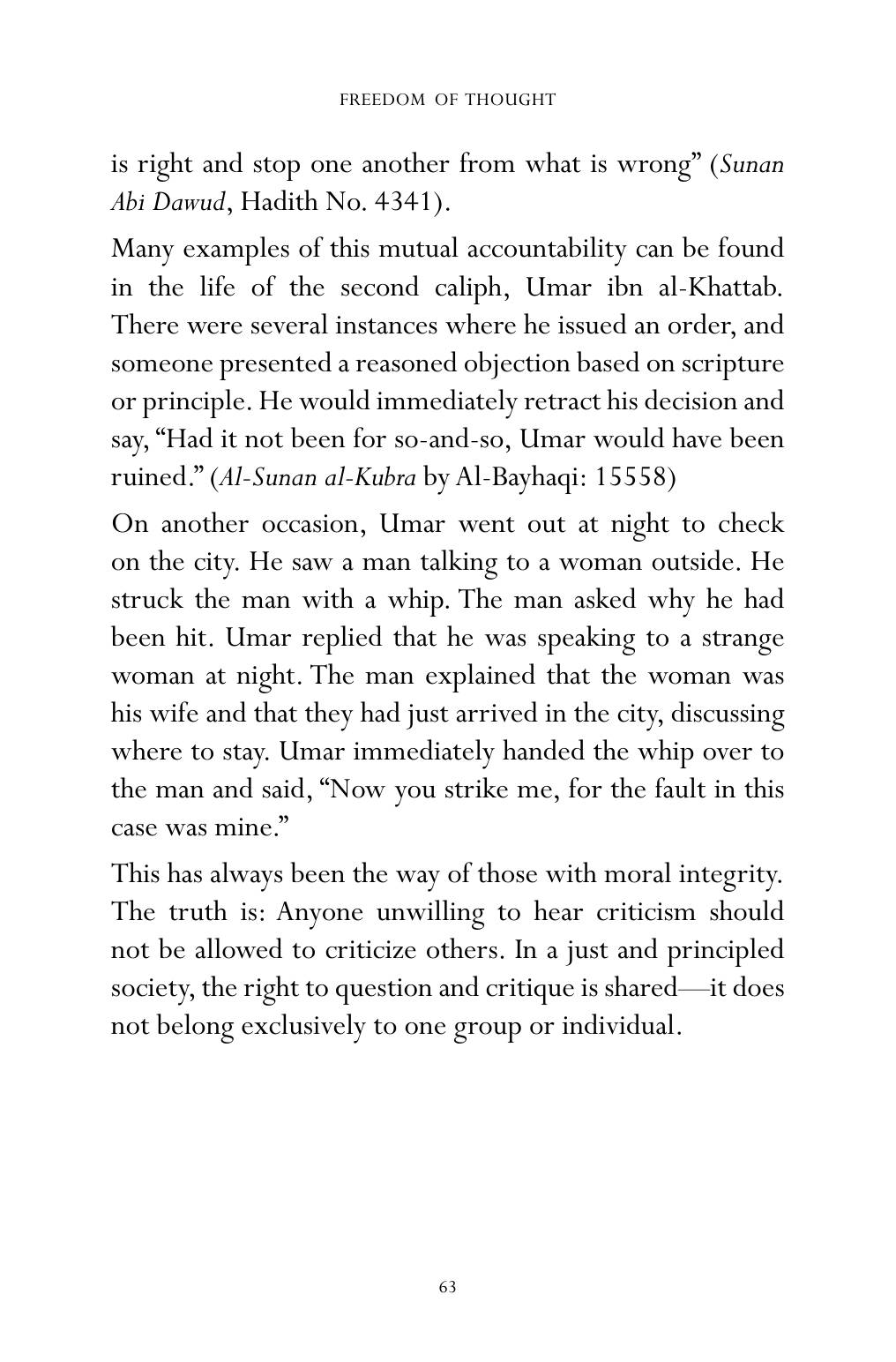
FREEDOM OF THOUGHT is right and stop one another from what is wrong” (Sunan Abi Dawud, Hadith No. 4341). Many examples of this mutual accountability can be found in the life of the second caliph, Umar ibn al-Khattab. There were several instances where he issued an order, and someone presented a reasoned objection based on scripture or principle. He would immediately retract his decision and say, “Had it not been for so-and-so, Umar would have been ruined.” (Al-Sunan al-Kubra by Al-Bayhaqi: 15558) On another occasion, Umar went out at night to check on the city. He saw a man talking to a woman outside. He struck the man with a whip. The man asked why he had been hit. Umar replied that he was speaking to a strange woman at night. The man explained that the woman was his wife and that they had just arrived in the city, discussing where to stay. Umar immediately handed the whip over to the man and said, “Now you strike me, for the fault in this case was mine.” This has always been the way of those with moral integrity. The truth is: Anyone unwilling to hear criticism should not be allowed to criticize others. In a just and principled society, the right to question and critique is shared—it does not belong exclusively to one group or individual.
‹ Previous page Next page › About this book Open in the reader