Shared Responsibility
English book, p. 65
By Maulana Wahiduddin Khan
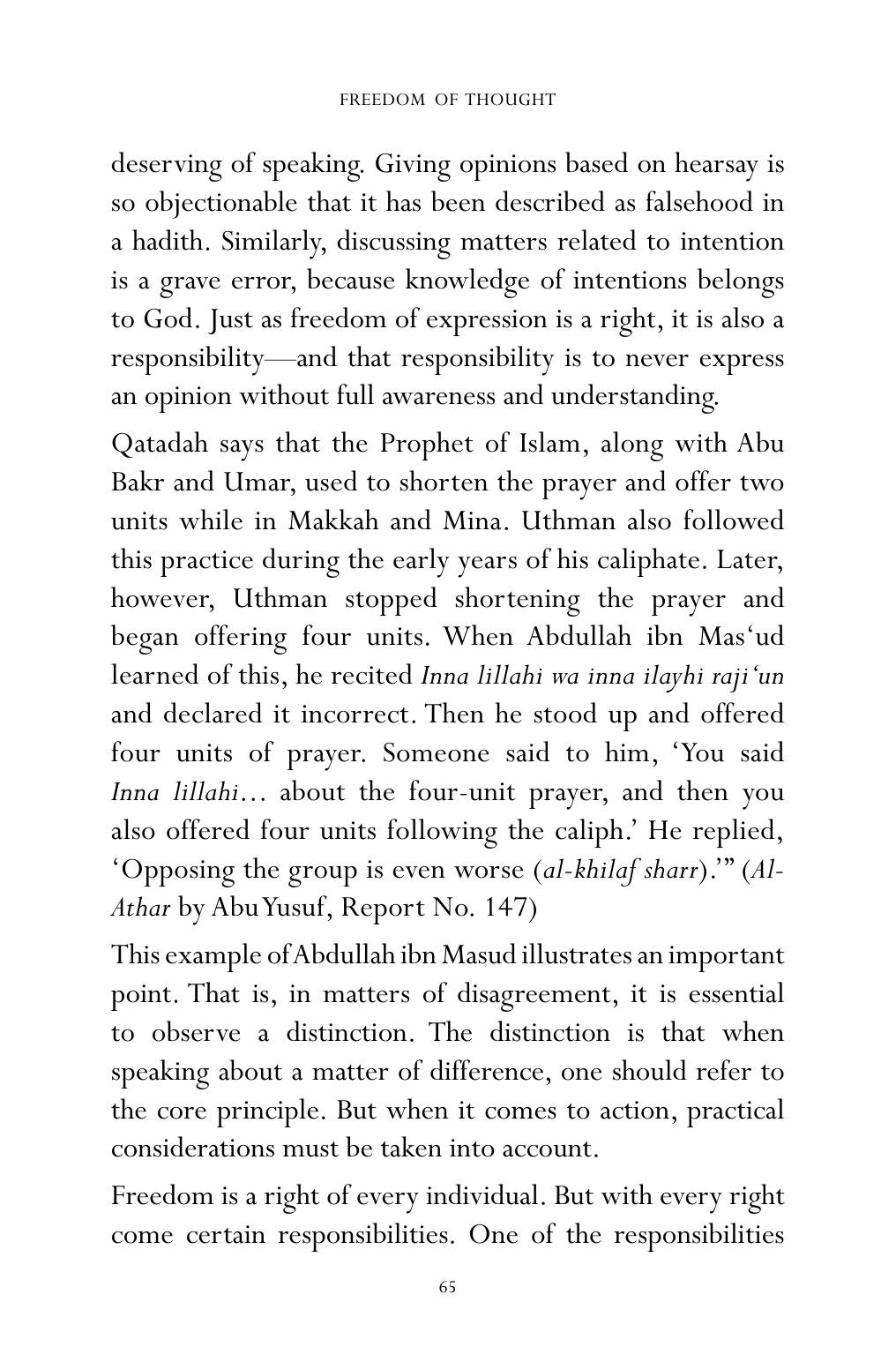
FREEDOM OF THOUGHT deserving of speaking. Giving opinions based on hearsay is so objectionable that it has been described as falsehood in a hadith. Similarly, discussing matters related to intention is a grave error, because knowledge of intentions belongs to God. Just as freedom of expression is a right, it is also a responsibility—and that responsibility is to never express an opinion without full awareness and understanding. Qatadah says that the Prophet of Islam, along with Abu Bakr and Umar, used to shorten the prayer and offer two units while in Makkah and Mina. Uthman also followed this practice during the early years of his caliphate. Later, however, Uthman stopped shortening the prayer and began offering four units. When Abdullah ibn Mas‘ud learned of this, he recited Inna lillahi wa inna ilayhi raji‘un and declared it incorrect. Then he stood up and offered four units of prayer. Someone said to him, ‘You said Inna lillahi... about the four-unit prayer, and then you also offered four units following the caliph.’ He replied, ‘Opposing the group is even worse (al-khilaf sharr).’” (AlAthar by Abu Yusuf, Report No. 147) This example of Abdullah ibn Masud illustrates an important point. That is, in matters of disagreement, it is essential to observe a distinction. The distinction is that when speaking about a matter of difference, one should refer to the core principle. But when it comes to action, practical considerations must be taken into account. Freedom is a right of every individual. But with every right come certain responsibilities. One of the responsibilities
‹ Previous page Next page › About this book Open in the reader