Islam and the Quran
English book, p. 66
By Maulana Wahiduddin Khan
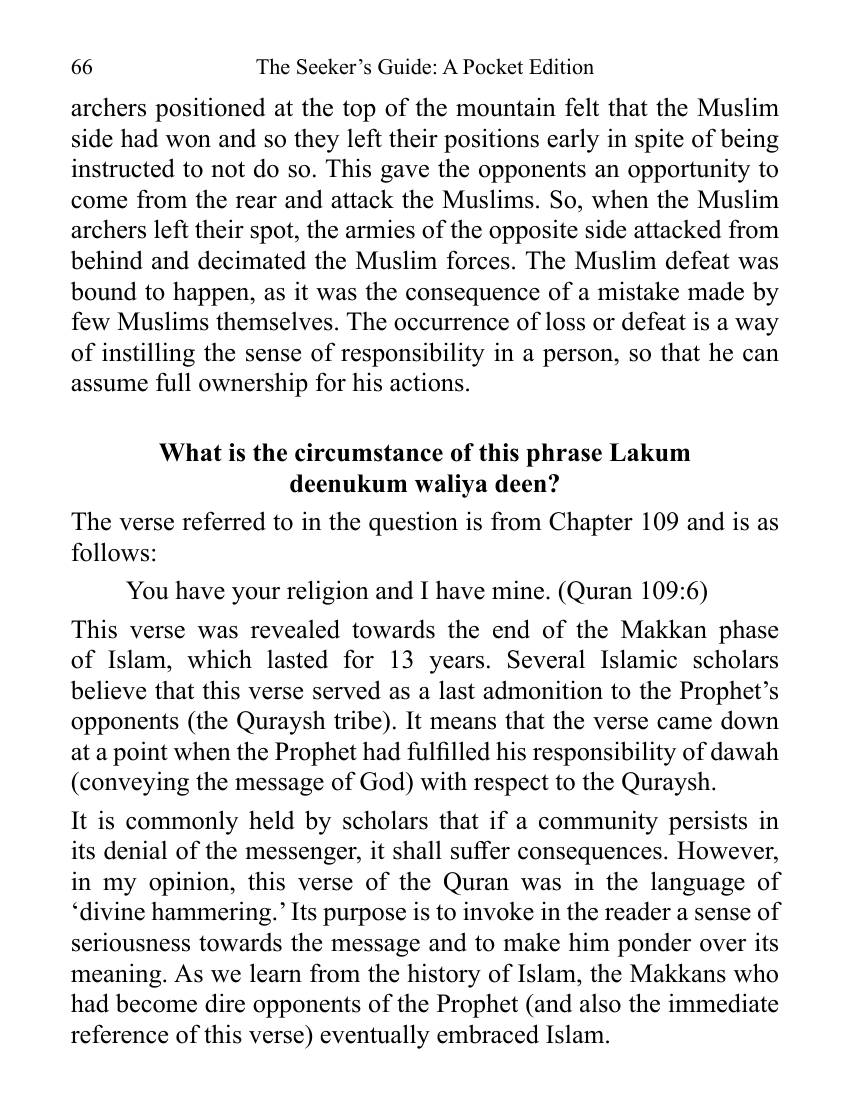
archers positioned at the top of the mountain felt that the Muslim side had won and so they left their positions early in spite of being instructed to not do so. This gave the opponents an opportunity to come from the rear and attack the Muslims. So, when the Muslim archers left their spot, the armies of the opposite side attacked from behind and decimated the Muslim forces. The Muslim defeat was bound to happen, as it was the consequence of a mistake made by few Muslims themselves. The occurrence of loss or defeat is a way of instilling the sense of responsibility in a person, so that he can assume full ownership for his actions. What is the circumstance of this phrase Lakum deenukum waliya deen? The verse referred to in the question is from Chapter 109 and is as follows: You have your religion and I have mine. (Quran 109:6) This verse was revealed towards the end of the Makkan phase of Islam, which lasted for 13 years. Several Islamic scholars believe that this verse served as a last admonition to the Prophet’s opponents (the Quraysh tribe). It means that the verse came down at a point when the Prophet had fulfilled his responsibility of dawah (conveying the message of God) with respect to the Quraysh. It is commonly held by scholars that if a community persists in its denial of the messenger, it shall suffer consequences. However, in my opinion, this verse of the Quran was in the language of ‘divine hammering.’ Its purpose is to invoke in the reader a sense of seriousness towards the message and to make him ponder over its meaning. As we learn from the history of Islam, the Makkans who had become dire opponents of the Prophet (and also the immediate reference of this verse) eventually embraced Islam.
‹ Previous page Next page › About this book Open in the reader