The Role Of Religion In Shaping Society
English book, p. 201
By Maulana Wahiduddin Khan
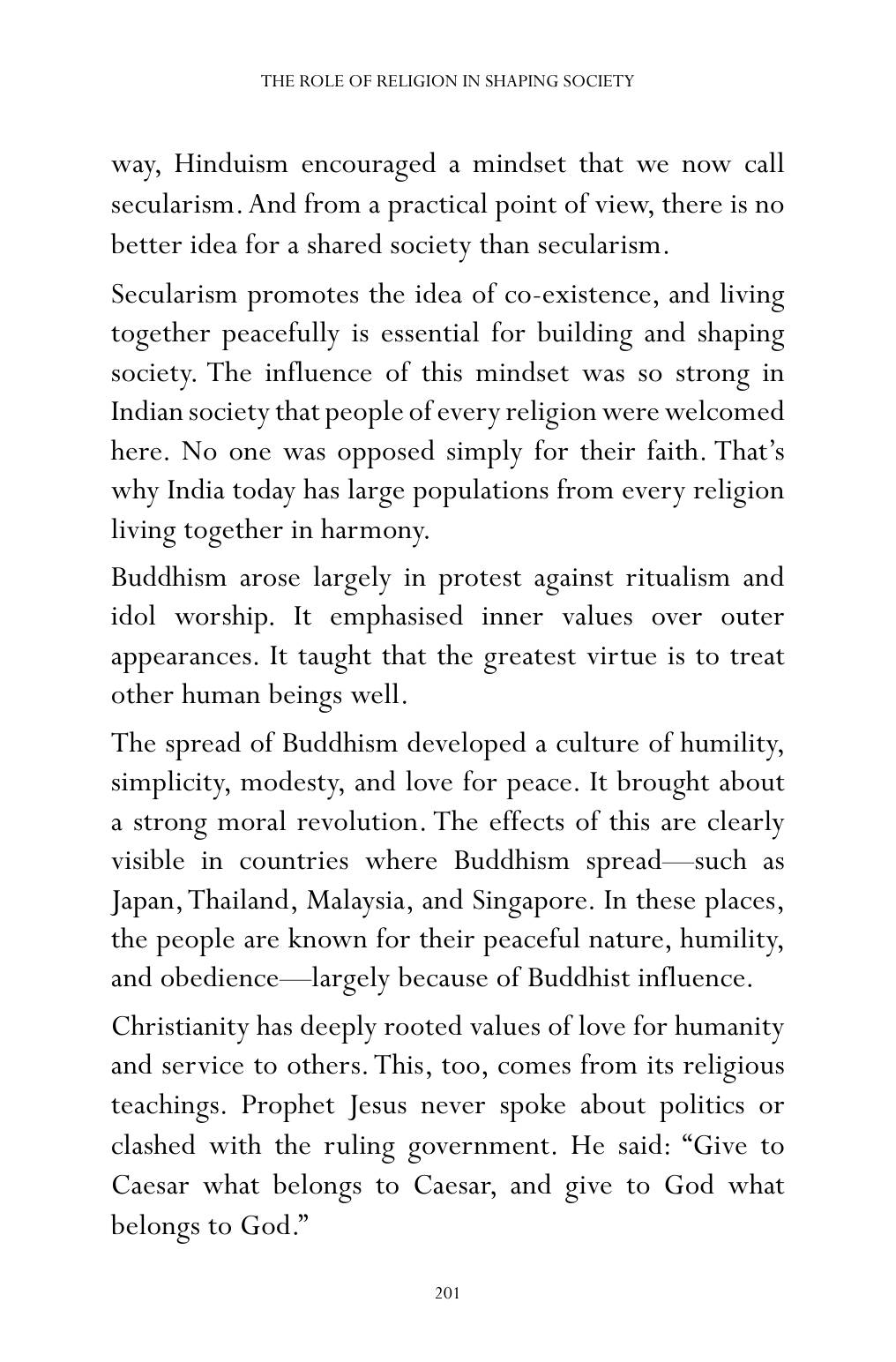
The Role of Religion in SHAPING SOCIETY way, Hinduism encouraged a mindset that we now call secularism. And from a practical point of view, there is no better idea for a shared society than secularism. Secularism promotes the idea of co-existence, and living together peacefully is essential for building and shaping society. The influence of this mindset was so strong in Indian society that people of every religion were welcomed here. No one was opposed simply for their faith. That’s why India today has large populations from every religion living together in harmony. Buddhism arose largely in protest against ritualism and idol worship. It emphasised inner values over outer appearances. It taught that the greatest virtue is to treat other human beings well. The spread of Buddhism developed a culture of humility, simplicity, modesty, and love for peace. It brought about a strong moral revolution. The effects of this are clearly visible in countries where Buddhism spread—such as Japan, Thailand, Malaysia, and Singapore. In these places, the people are known for their peaceful nature, humility, and obedience—largely because of Buddhist influence. Christianity has deeply rooted values of love for humanity and service to others. This, too, comes from its religious teachings. Prophet Jesus never spoke about politics or clashed with the ruling government. He said: “Give to Caesar what belongs to Caesar, and give to God what belongs to God.”
‹ Previous page Next page › About this book Open in the reader