Islamic Festivals
English book, p. 81
By Maulana Wahiduddin Khan
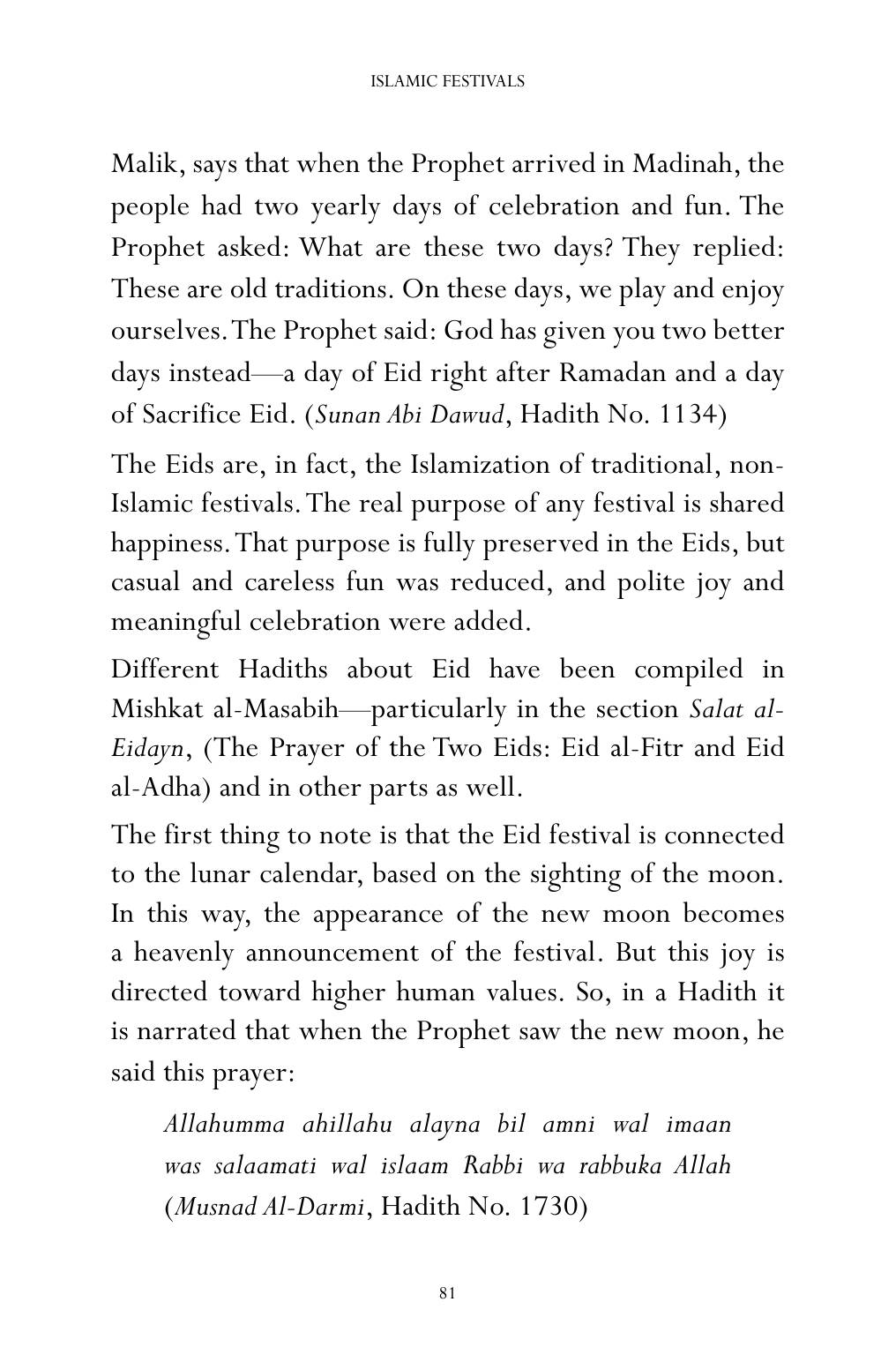
Islamic Festivals Malik, says that when the Prophet arrived in Madinah, the people had two yearly days of celebration and fun. The Prophet asked: What are these two days? They replied: These are old traditions. On these days, we play and enjoy ourselves. The Prophet said: God has given you two better days instead—a day of Eid right after Ramadan and a day of Sacrifice Eid. (Sunan Abi Dawud, Hadith No. 1134) The Eids are, in fact, the Islamization of traditional, nonIslamic festivals. The real purpose of any festival is shared happiness. That purpose is fully preserved in the Eids, but casual and careless fun was reduced, and polite joy and meaningful celebration were added. Different Hadiths about Eid have been compiled in Mishkat al-Masabih—particularly in the section Salat alEidayn, (The Prayer of the Two Eids: Eid al-Fitr and Eid al-Adha) and in other parts as well. The first thing to note is that the Eid festival is connected to the lunar calendar, based on the sighting of the moon. In this way, the appearance of the new moon becomes a heavenly announcement of the festival. But this joy is directed toward higher human values. So, in a Hadith it is narrated that when the Prophet saw the new moon, he said this prayer: Allahumma ahillahu alayna bil amni wal imaan was salaamati wal islaam Rabbi wa rabbuka Allah (Musnad Al-Darmi, Hadith No. 1730)
‹ Previous page Next page › About this book Open in the reader