Two Ways of Divorcing
English book, p. 219
By Maulana Wahiduddin Khan
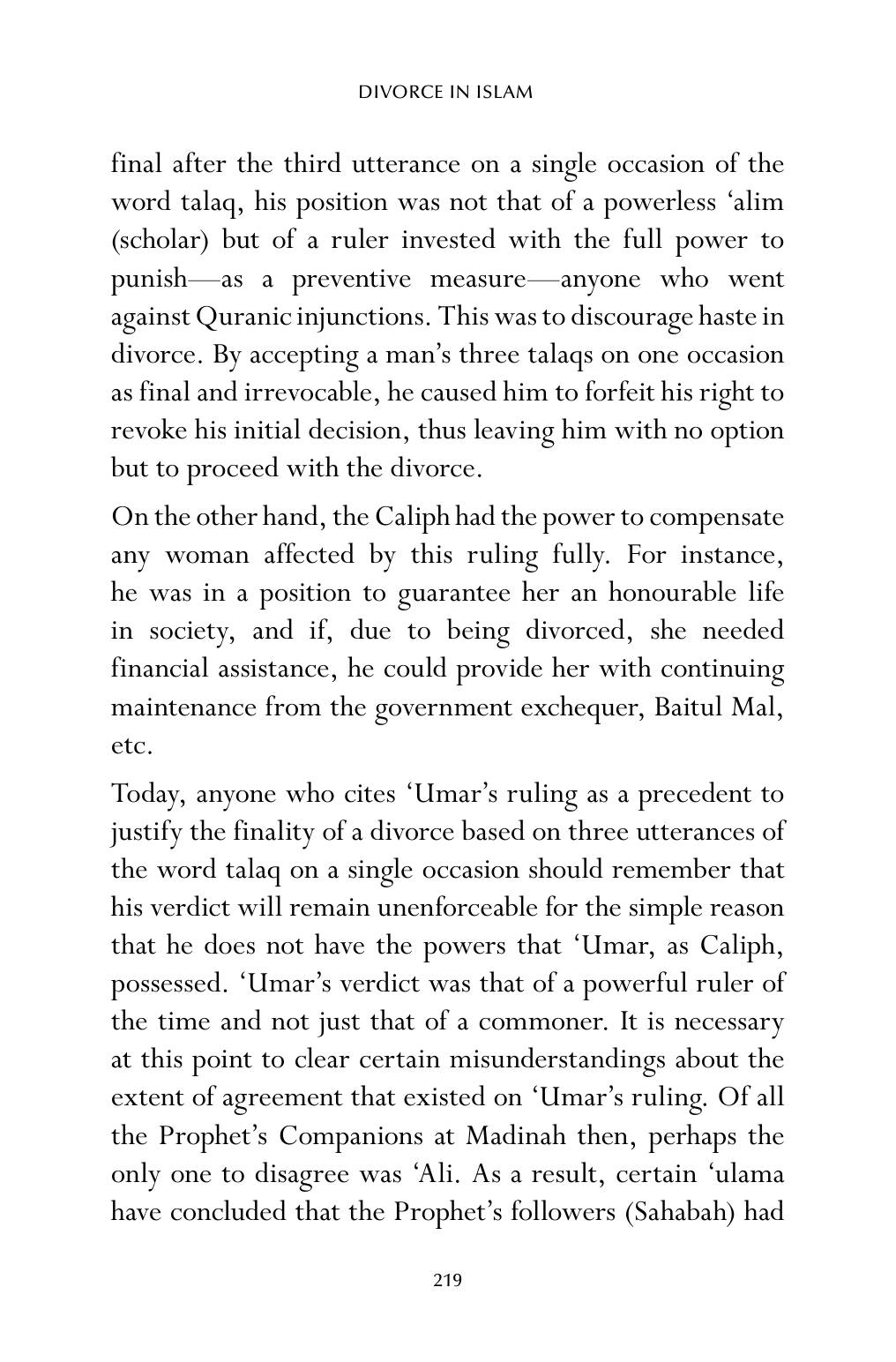
DIVORCE IN ISLAM final after the third utterance on a single occasion of the word talaq, his position was not that of a powerless ‘alim (scholar) but of a ruler invested with the full power to punish—as a preventive measure—anyone who went against Quranic injunctions. This was to discourage haste in divorce. By accepting a man’s three talaqs on one occasion as final and irrevocable, he caused him to forfeit his right to revoke his initial decision, thus leaving him with no option but to proceed with the divorce. On the other hand, the Caliph had the power to compensate any woman affected by this ruling fully. For instance, he was in a position to guarantee her an honourable life in society, and if, due to being divorced, she needed financial assistance, he could provide her with continuing maintenance from the government exchequer, Baitul Mal, etc. Today, anyone who cites ‘Umar’s ruling as a precedent to justify the finality of a divorce based on three utterances of the word talaq on a single occasion should remember that his verdict will remain unenforceable for the simple reason that he does not have the powers that ‘Umar, as Caliph, possessed. ‘Umar’s verdict was that of a powerful ruler of the time and not just that of a commoner. It is necessary at this point to clear certain misunderstandings about the extent of agreement that existed on ‘Umar’s ruling. Of all the Prophet’s Companions at Madinah then, perhaps the only one to disagree was ‘Ali. As a result, certain ‘ulama have concluded that the Prophet’s followers (Sahabah) had
‹ Previous page Next page › About this book Open in the reader