Women and Education
English book, p. 35
By Maulana Wahiduddin Khan
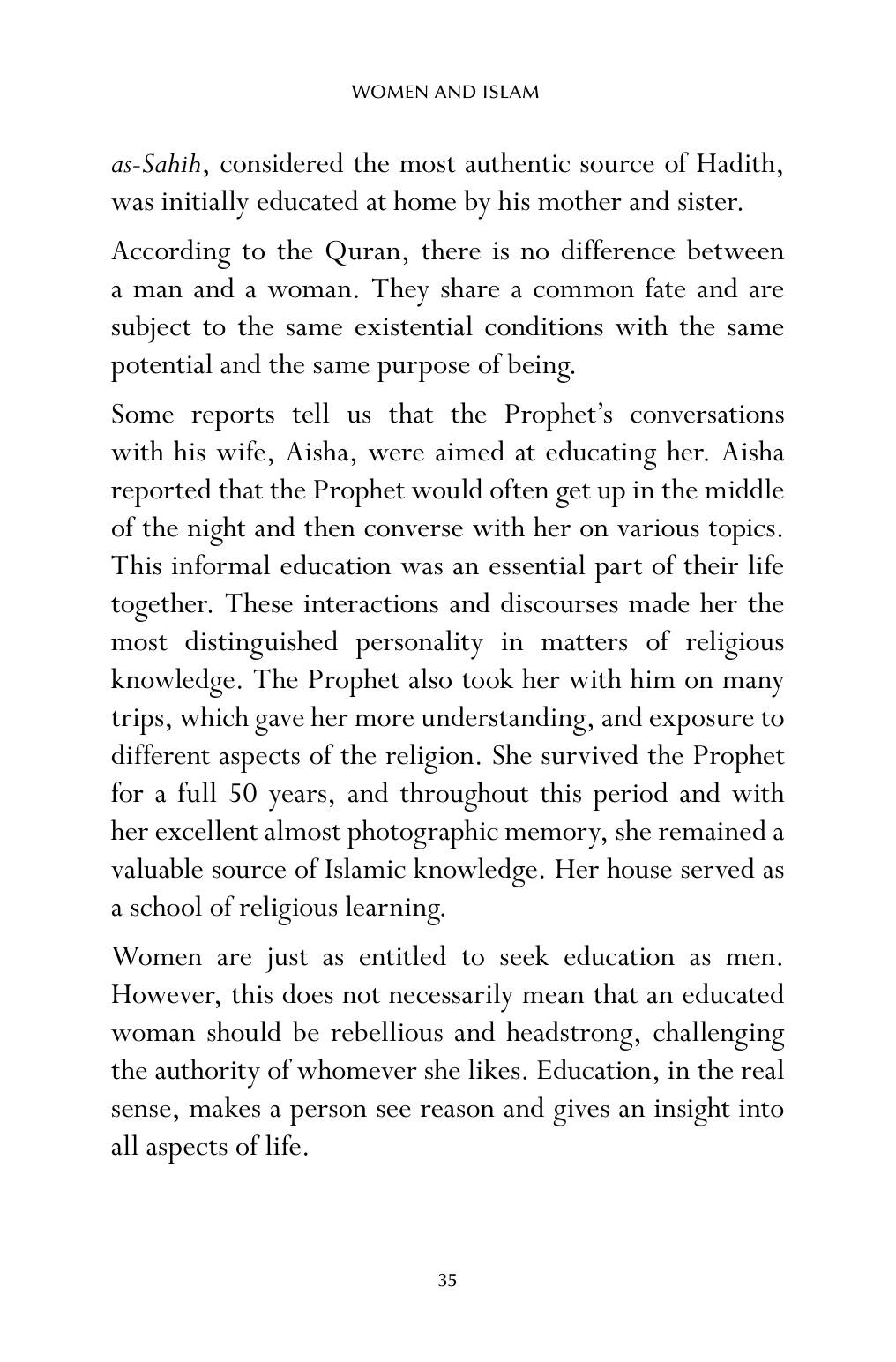
WOMEN AND ISLAM as-Sahih, considered the most authentic source of Hadith, was initially educated at home by his mother and sister. According to the Quran, there is no difference between a man and a woman. They share a common fate and are subject to the same existential conditions with the same potential and the same purpose of being. Some reports tell us that the Prophet’s conversations with his wife, Aisha, were aimed at educating her. Aisha reported that the Prophet would often get up in the middle of the night and then converse with her on various topics. This informal education was an essential part of their life together. These interactions and discourses made her the most distinguished personality in matters of religious knowledge. The Prophet also took her with him on many trips, which gave her more understanding, and exposure to different aspects of the religion. She survived the Prophet for a full 50 years, and throughout this period and with her excellent almost photographic memory, she remained a valuable source of Islamic knowledge. Her house served as a school of religious learning. Women are just as entitled to seek education as men. However, this does not necessarily mean that an educated woman should be rebellious and headstrong, challenging the authority of whomever she likes. Education, in the real sense, makes a person see reason and gives an insight into all aspects of life.
‹ Previous page Next page › About this book Open in the reader