ASK MAULANA
Spirit of Islam, Sept 2013, p. 45
By Maulana Wahiduddin Khan
Maulana Wahiduddin Khan is named as the default author of the periodical; a piece that carries another writer’s byline is credited to that writer.
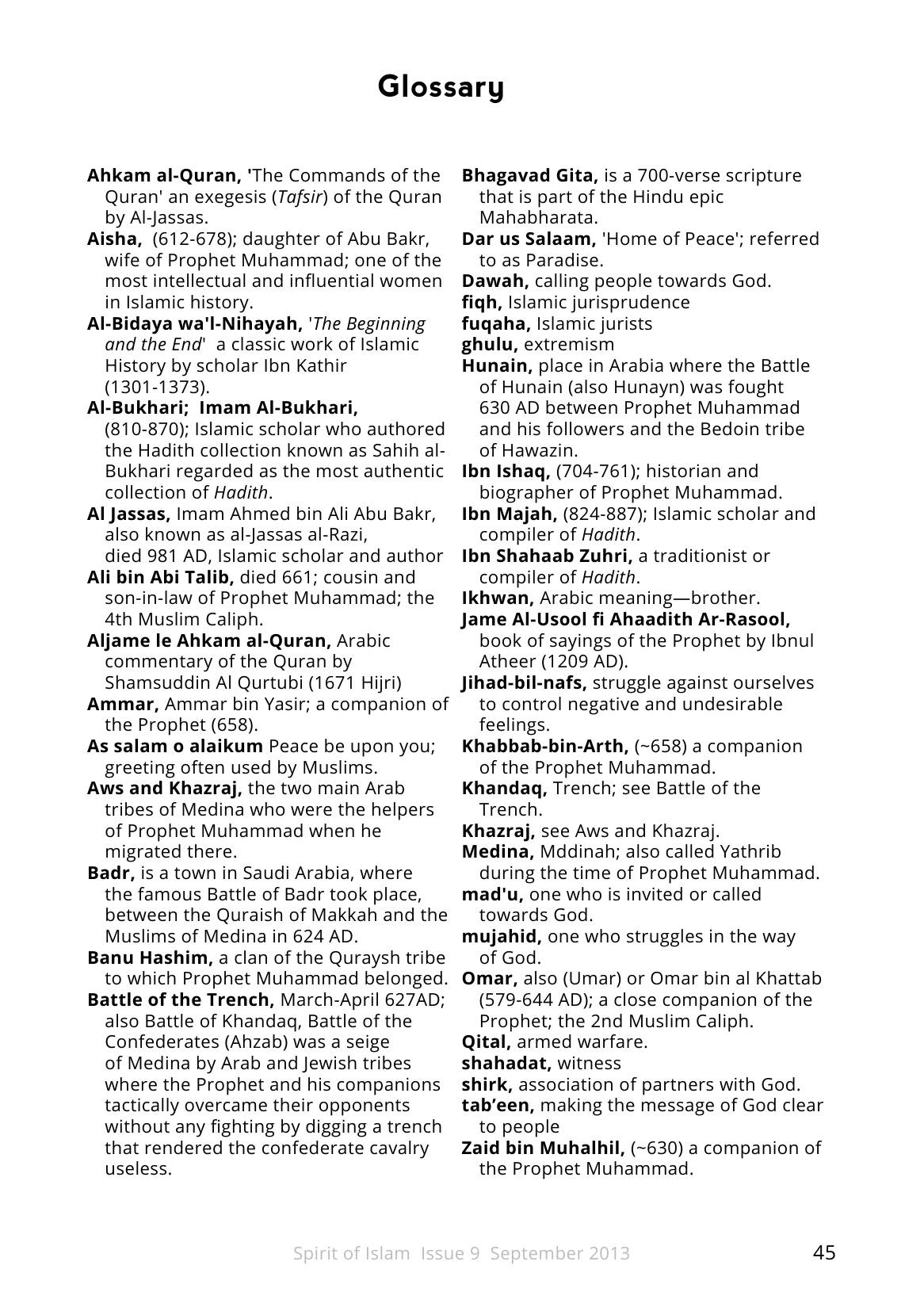
Ahkam al-Quran, 'The Commands of the Quran' an exegesis (Tafsir) of the Quran by Al-Jassas. Aisha, (612-678); daughter of Abu Bakr, wife of Prophet Muhammad; one of the most intellectual and influential women in Islamic history. Al-Bidaya wa'l-Nihayah, 'The Beginning and the End' a classic work of Islamic History by scholar Ibn Kathir (1301-1373). Al-Bukhari; Imam Al-Bukhari, (810-870); Islamic scholar who authored the Hadith collection known as Sahih alBukhari regarded as the most authentic collection of Hadith. Al Jassas, Imam Ahmed bin Ali Abu Bakr, also known as al-Jassas al-Razi, died 981 AD, Islamic scholar and author Ali bin Abi Talib, died 661; cousin and son-in-law of Prophet Muhammad; the 4th Muslim Caliph. Aljame le Ahkam al-Quran, Arabic commentary of the Quran by Shamsuddin Al Qurtubi (1671 Hijri) Ammar, Ammar bin Yasir; a companion of the Prophet (658). As salam o alaikum Peace be upon you; greeting often used by Muslims. Aws and Khazraj, the two main Arab tribes of Medina who were the helpers of Prophet Muhammad when he migrated there. Badr, is a town in Saudi Arabia, where the famous Battle of Badr took place, between the Quraish of Makkah and the Muslims of Medina in 624 AD. Banu Hashim, a clan of the Quraysh tribe to which Prophet Muhammad belonged. Battle of the Trench, March-April 627AD; also Battle of Khandaq, Battle of the Confederates (Ahzab) was a seige of Medina by Arab and Jewish tribes where the Prophet and his companions tactically overcame their opponents without any fighting by digging a trench that rendered the confederate cavalry useless. Bhagavad Gita, is a 700-verse scripture that is part of the Hindu epic Mahabharata. Dar us Salaam, 'Home of Peace'; referred to as Paradise. Dawah, calling people towards God. fiqh, Islamic jurisprudence fuqaha, Islamic jurists ghulu, extremism Hunain, place in Arabia where the Battle of Hunain (also Hunayn) was fought 630 AD between Prophet Muhammad and his followers and the Bedoin tribe of Hawazin. Ibn Ishaq, (704-761); historian and biographer of Prophet Muhammad. Ibn Majah, (824-887); Islamic scholar and compiler of Hadith. Ibn Shahaab Zuhri, a traditionist or compiler of Hadith. Ikhwan, Arabic meaning—brother. Jame Al-Usool fi Ahaadith Ar-Rasool, book of sayings of the Prophet by Ibnul Atheer (1209 AD). Jihad-bil-nafs, struggle against ourselves to control negative and undesirable feelings. Khabbab-bin-Arth, (~658) a companion of the Prophet Muhammad. Khandaq, Trench; see Battle of the Trench. Khazraj, see Aws and Khazraj. Medina, Mddinah; also called Yathrib during the time of Prophet Muhammad. mad'u, one who is invited or called towards God. mujahid, one who struggles in the way of God. Omar, also (Umar) or Omar bin al Khattab (579-644 AD); a close companion of the Prophet; the 2nd Muslim Caliph. Qital, armed warfare. shahadat, witness shirk, association of partners with God. tab’een, making the message of God clear to people Zaid bin Muhalhil, (~630) a companion of the Prophet Muhammad. Glossary
‹ Previous page Next page › About this issue Open in the reader