PILGRIMS OF HOPE
Spirit of Islam, Nov-Dec 2024, p. 31
By Maulana Wahiduddin Khan
Maulana Wahiduddin Khan is named as the default author of the periodical; a piece that carries another writer’s byline is credited to that writer.
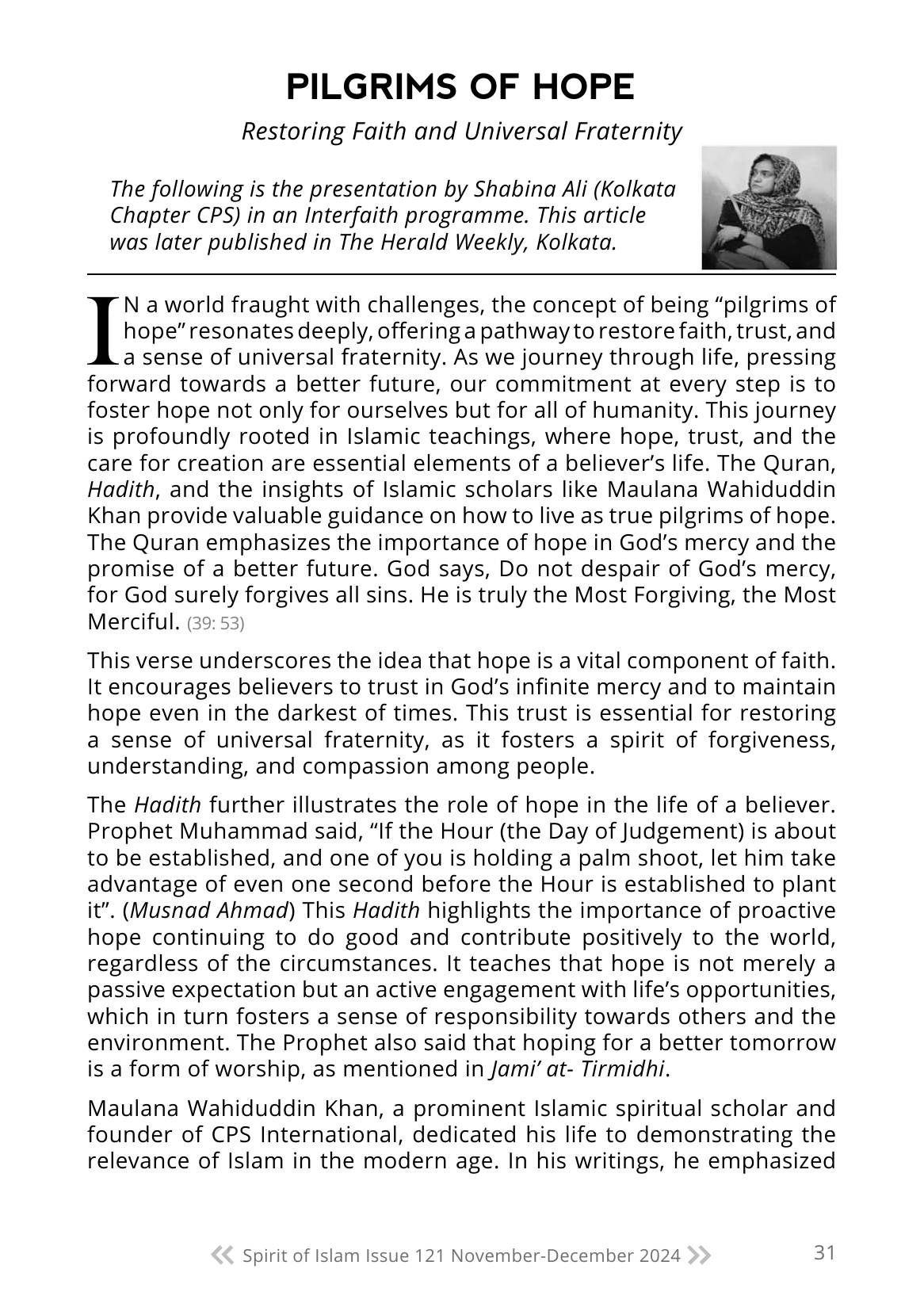
PILGRIMS OF HOPE Restoring Faith and Universal Fraternity The following is the presentation by Shabina Ali (Kolkata Chapter CPS) in an Interfaith programme. This article was later published in The Herald Weekly, Kolkata. I N a world fraught with challenges, the concept of being “pilgrims of hope” resonates deeply, offering a pathway to restore faith, trust, and a sense of universal fraternity. As we journey through life, pressing forward towards a better future, our commitment at every step is to foster hope not only for ourselves but for all of humanity. This journey is profoundly rooted in Islamic teachings, where hope, trust, and the care for creation are essential elements of a believer’s life. The Quran, Hadith, and the insights of Islamic scholars like Maulana Wahiduddin Khan provide valuable guidance on how to live as true pilgrims of hope. The Quran emphasizes the importance of hope in God’s mercy and the promise of a better future. God says, Do not despair of God’s mercy, for God surely forgives all sins. He is truly the Most Forgiving, the Most Merciful. (39: 53) This verse underscores the idea that hope is a vital component of faith. It encourages believers to trust in God’s infinite mercy and to maintain hope even in the darkest of times. This trust is essential for restoring a sense of universal fraternity, as it fosters a spirit of forgiveness, understanding, and compassion among people. The Hadith further illustrates the role of hope in the life of a believer. Prophet Muhammad said, “If the Hour (the Day of Judgement) is about to be established, and one of you is holding a palm shoot, let him take advantage of even one second before the Hour is established to plant it”. (Musnad Ahmad) This Hadith highlights the importance of proactive hope continuing to do good and contribute positively to the world, regardless of the circumstances. It teaches that hope is not merely a passive expectation but an active engagement with life’s opportunities, which in turn fosters a sense of responsibility towards others and the environment. The Prophet also said that hoping for a better tomorrow is a form of worship, as mentioned in Jami’ at- Tirmidhi. Maulana Wahiduddin Khan, a prominent Islamic spiritual scholar and founder of CPS International, dedicated his life to demonstrating the relevance of Islam in the modern age. In his writings, he emphasized
‹ Previous page Next page › About this issue Open in the reader