NEW YEAR’S MESSAGE
Spirit of Islam, Jan-Feb 2025, p. 5
By Maulana Wahiduddin Khan
Maulana Wahiduddin Khan is named as the default author of the periodical; a piece that carries another writer’s byline is credited to that writer.
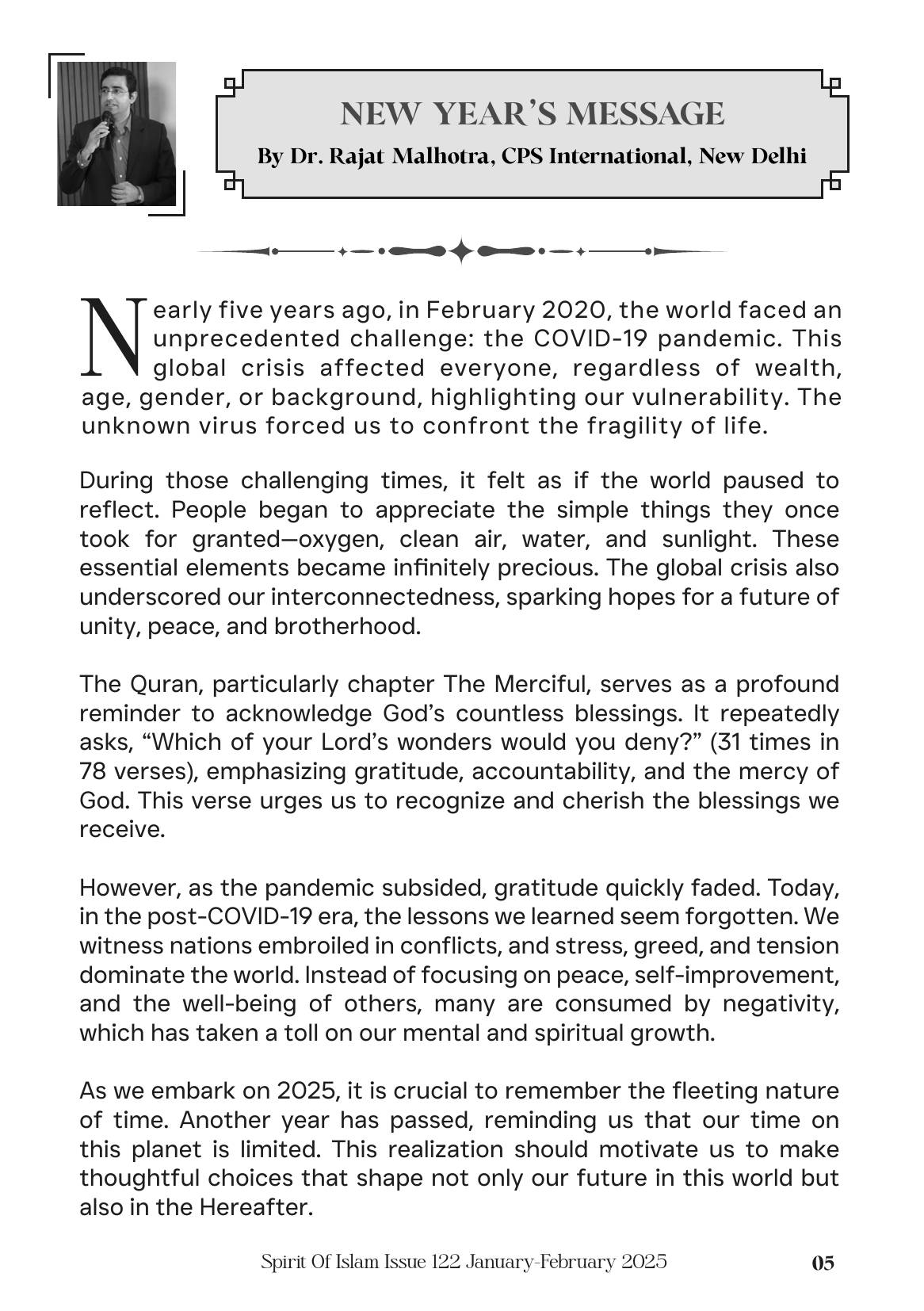
N early five years ago, in February 2020, the world faced an unprecedented challenge: the COVID-19 pandemic. This global crisis affected everyone, regardless of wealth, age, gender, or background, highlighting our vulnerability. The unknown virus forced us to confront the fragility of life. NEW YEAR’S MESSAGE By Dr. Rajat Malhotra, CPS International, New Delhi During those challenging times, it felt as if the world paused to reflect. People began to appreciate the simple things they once took for granted—oxygen, clean air, water, and sunlight. These essential elements became infinitely precious. The global crisis also underscored our interconnectedness, sparking hopes for a future of unity, peace, and brotherhood. The Quran, particularly chapter The Merciful, serves as a profound reminder to acknowledge God’s countless blessings. It repeatedly asks, “Which of your Lord’s wonders would you deny?” (31 times in 78 verses), emphasizing gratitude, accountability, and the mercy of God. This verse urges us to recognize and cherish the blessings we receive. However, as the pandemic subsided, gratitude quickly faded. Today, in the post-COVID-19 era, the lessons we learned seem forgotten. We witness nations embroiled in conflicts, and stress, greed, and tension dominate the world. Instead of focusing on peace, self-improvement, and the well-being of others, many are consumed by negativity, which has taken a toll on our mental and spiritual growth. As we embark on 2025, it is crucial to remember the fleeting nature of time. Another year has passed, reminding us that our time on this planet is limited. This realization should motivate us to make thoughtful choices that shape not only our future in this world but also in the Hereafter.
‹ Previous page Next page › About this issue Open in the reader