The Efforts of Indian Ulama in Establishing Madrasas
English book, p. 25
By Maulana Wahiduddin Khan
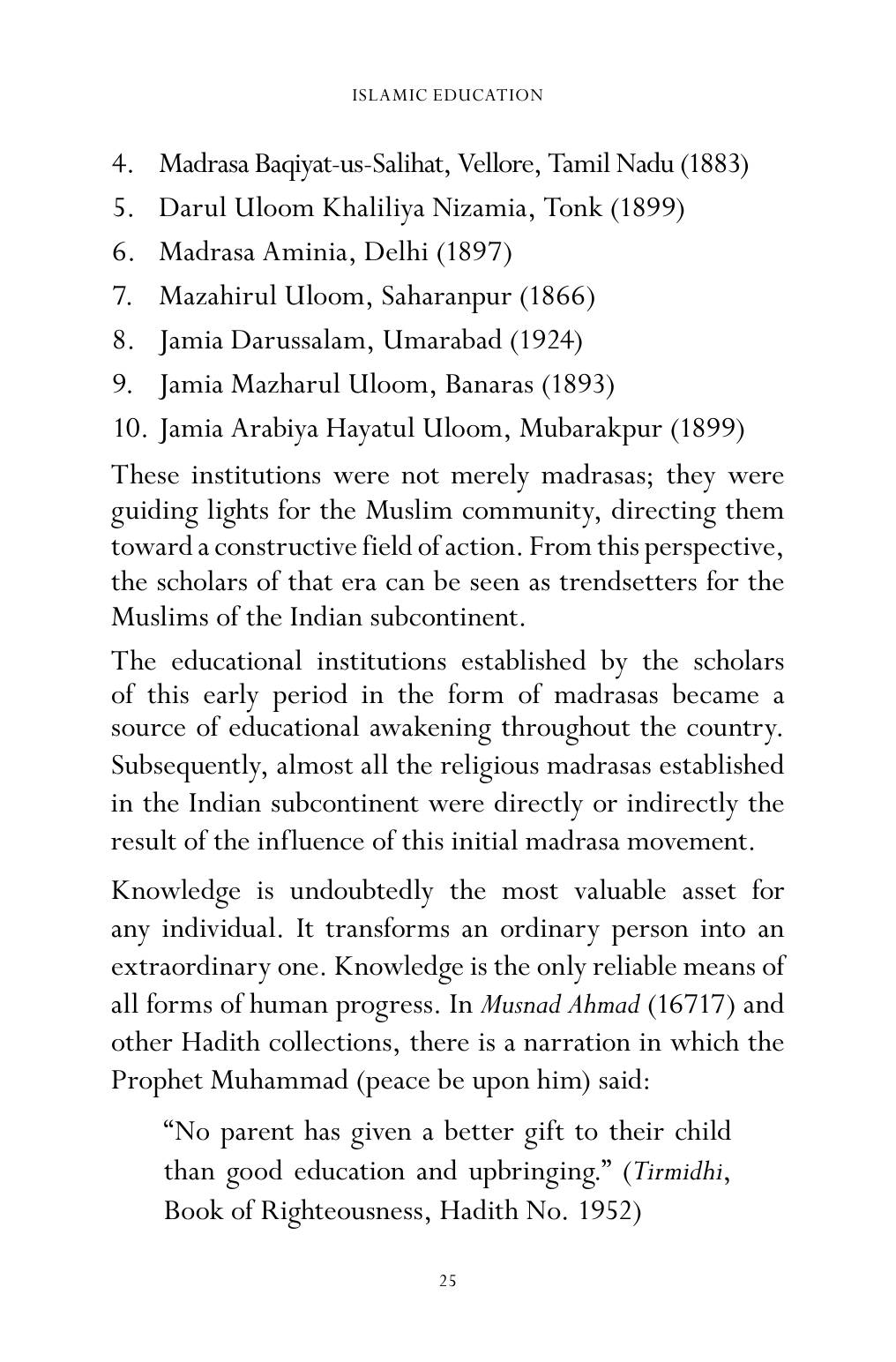
4. Madrasa Baqiyat-us-Salihat, Vellore, Tamil Nadu (1883) 5. Darul Uloom Khaliliya Nizamia, Tonk (1899) 6. Madrasa Aminia, Delhi (1897) 7. Mazahirul Uloom, Saharanpur (1866) 8. Jamia Darussalam, Umarabad (1924) 9. Jamia Mazharul Uloom, Banaras (1893) 10. Jamia Arabiya Hayatul Uloom, Mubarakpur (1899) These institutions were not merely madrasas; they were guiding lights for the Muslim community, directing them toward a constructive field of action. From this perspective, the scholars of that era can be seen as trendsetters for the Muslims of the Indian subcontinent. The educational institutions established by the scholars of this early period in the form of madrasas became a source of educational awakening throughout the country. Subsequently, almost all the religious madrasas established in the Indian subcontinent were directly or indirectly the result of the influence of this initial madrasa movement. Knowledge is undoubtedly the most valuable asset for any individual. It transforms an ordinary person into an extraordinary one. Knowledge is the only reliable means of all forms of human progress. In Musnad Ahmad (16717) and other Hadith collections, there is a narration in which the Prophet Muhammad (peace be upon him) said: “No parent has given a better gift to their child than good education and upbringing.” (Tirmidhi, Book of Righteousness, Hadith No. 1952)
‹ Previous page Next page › About this book Open in the reader