A COMPARISON
English book, p. 539
By Maulana Wahiduddin Khan
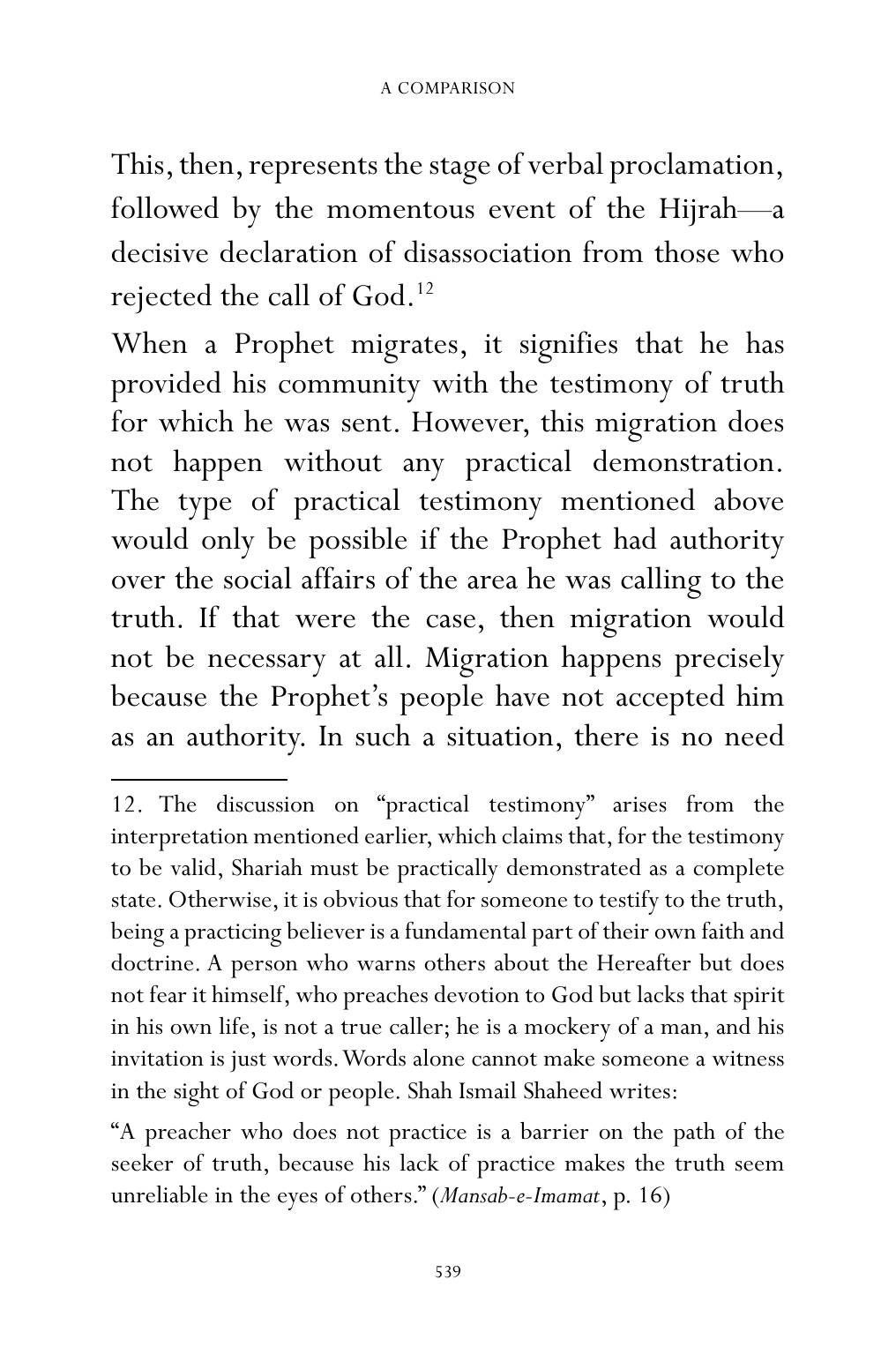
A COMPARISON This, then, represents the stage of verbal proclamation, followed by the momentous event of the Hijrah—a decisive declaration of disassociation from those who rejected the call of God.12 When a Prophet migrates, it signifies that he has provided his community with the testimony of truth for which he was sent. However, this migration does not happen without any practical demonstration. The type of practical testimony mentioned above would only be possible if the Prophet had authority over the social affairs of the area he was calling to the truth. If that were the case, then migration would not be necessary at all. Migration happens precisely because the Prophet’s people have not accepted him as an authority. In such a situation, there is no need 12. The discussion on “practical testimony” arises from the interpretation mentioned earlier, which claims that, for the testimony to be valid, Shariah must be practically demonstrated as a complete state. Otherwise, it is obvious that for someone to testify to the truth, being a practicing believer is a fundamental part of their own faith and doctrine. A person who warns others about the Hereafter but does not fear it himself, who preaches devotion to God but lacks that spirit in his own life, is not a true caller; he is a mockery of a man, and his invitation is just words. Words alone cannot make someone a witness in the sight of God or people. Shah Ismail Shaheed writes: “A preacher who does not practice is a barrier on the path of the seeker of truth, because his lack of practice makes the truth seem unreliable in the eyes of others.” (Mansab-e-Imamat, p. 16)
‹ Previous page Next page › About this book Open in the reader