Prayer (Salat
English book, p. 46
By Maulana Wahiduddin Khan
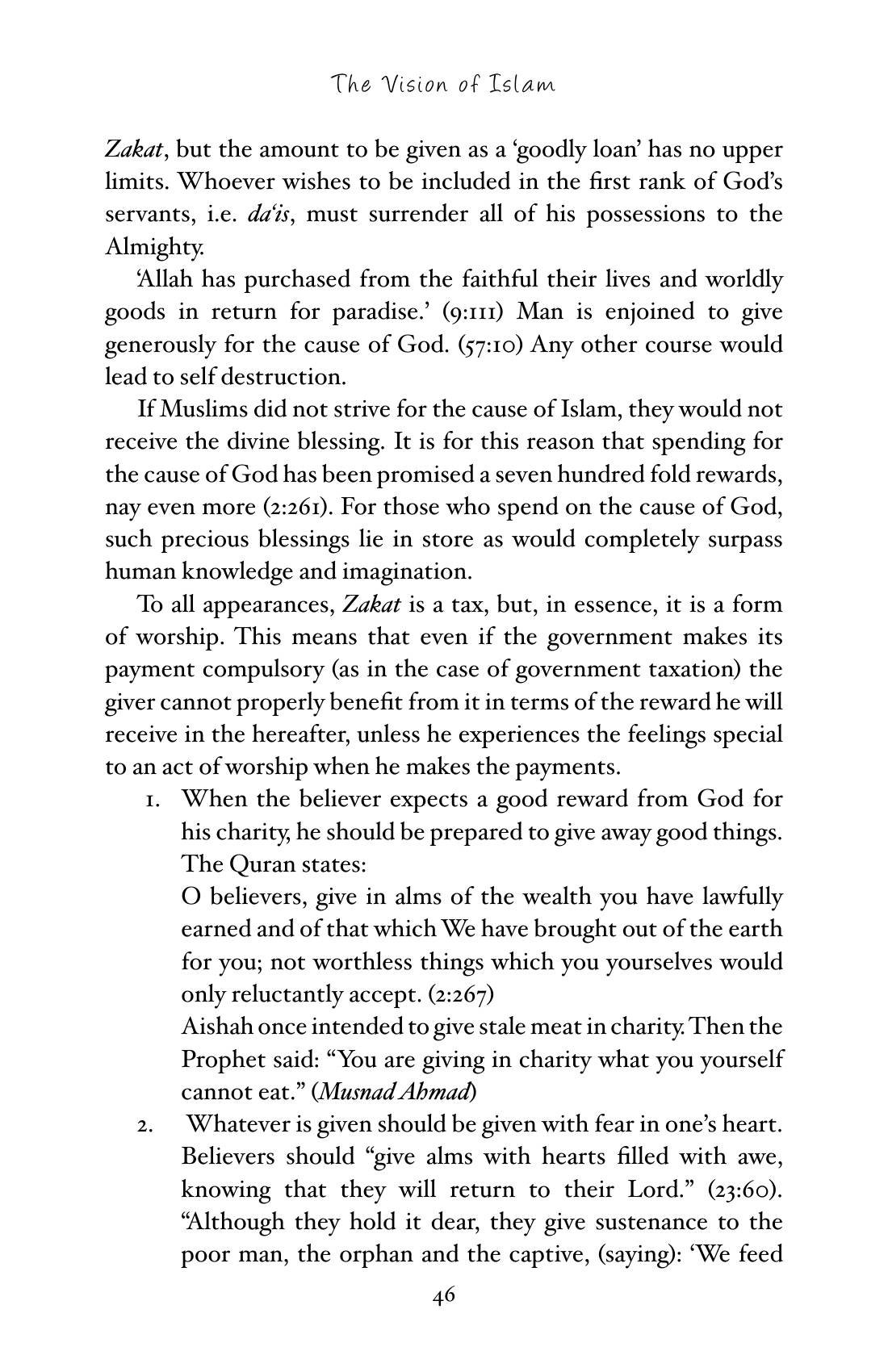
Zakat, but the amount to be given as a ‘goodly loan’ has no upper limits. Whoever wishes to be included in the first rank of God’s servants, i.e. da‘is, must surrender all of his possessions to the Almighty. ‘Allah has purchased from the faithful their lives and worldly goods in return for paradise.’ (9:111) Man is enjoined to give generously for the cause of God. (57:10) Any other course would lead to self destruction. If Muslims did not strive for the cause of Islam, they would not receive the divine blessing. It is for this reason that spending for the cause of God has been promised a seven hundred fold rewards, nay even more (2:261). For those who spend on the cause of God, such precious blessings lie in store as would completely surpass human knowledge and imagination. To all appearances, Zakat is a tax, but, in essence, it is a form of worship. This means that even if the government makes its payment compulsory (as in the case of government taxation) the giver cannot properly benefit from it in terms of the reward he will receive in the hereafter, unless he experiences the feelings special to an act of worship when he makes the payments. 1. When the believer expects a good reward from God for his charity, he should be prepared to give away good things. The Quran states: O believers, give in alms of the wealth you have lawfully earned and of that which We have brought out of the earth for you; not worthless things which you yourselves would only reluctantly accept. (2:267) Aishah once intended to give stale meat in charity. Then the Prophet said: “You are giving in charity what you yourself cannot eat.” (Musnad Ahmad) 2. Whatever is given should be given with fear in one’s heart. Believers should “give alms with hearts filled with awe, knowing that they will return to their Lord.” (23:60). “Although they hold it dear, they give sustenance to the poor man, the orphan and the captive, (saying): ‘We feed
‹ Previous page Next page › About this book Open in the reader