Islam and Women
English book, p. 57
By Maulana Wahiduddin Khan
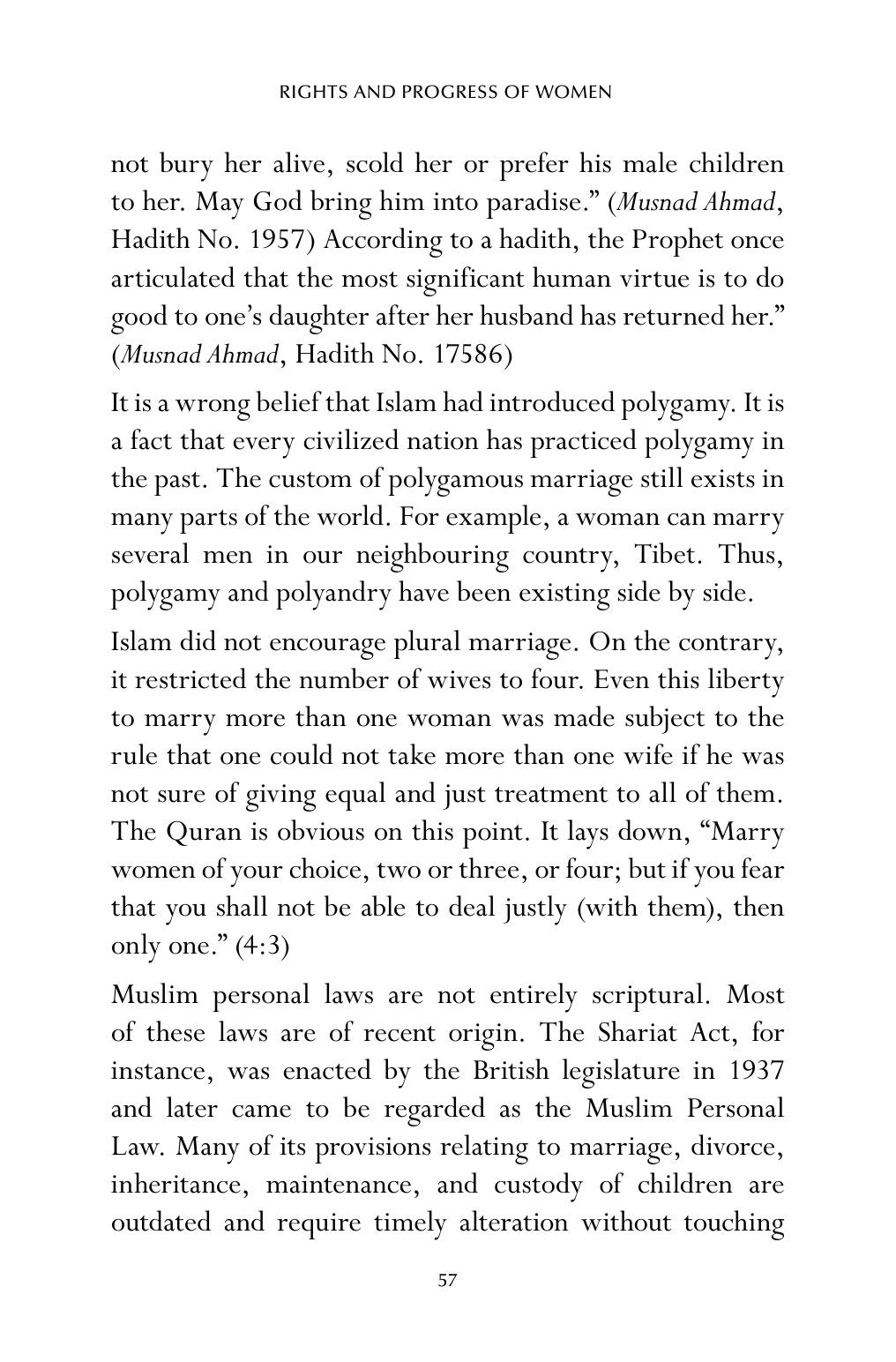
RIGHTS AND PROGRESS OF WOMEN not bury her alive, scold her or prefer his male children to her. May God bring him into paradise.” (Musnad Ahmad, Hadith No. 1957) According to a hadith, the Prophet once articulated that the most significant human virtue is to do good to one’s daughter after her husband has returned her.” (Musnad Ahmad, Hadith No. 17586) It is a wrong belief that Islam had introduced polygamy. It is a fact that every civilized nation has practiced polygamy in the past. The custom of polygamous marriage still exists in many parts of the world. For example, a woman can marry several men in our neighbouring country, Tibet. Thus, polygamy and polyandry have been existing side by side. Islam did not encourage plural marriage. On the contrary, it restricted the number of wives to four. Even this liberty to marry more than one woman was made subject to the rule that one could not take more than one wife if he was not sure of giving equal and just treatment to all of them. The Quran is obvious on this point. It lays down, “Marry women of your choice, two or three, or four; but if you fear that you shall not be able to deal justly (with them), then only one.” (4:3) Muslim personal laws are not entirely scriptural. Most of these laws are of recent origin. The Shariat Act, for instance, was enacted by the British legislature in 1937 and later came to be regarded as the Muslim Personal Law. Many of its provisions relating to marriage, divorce, inheritance, maintenance, and custody of children are outdated and require timely alteration without touching
‹ Previous page Next page › About this book Open in the reader